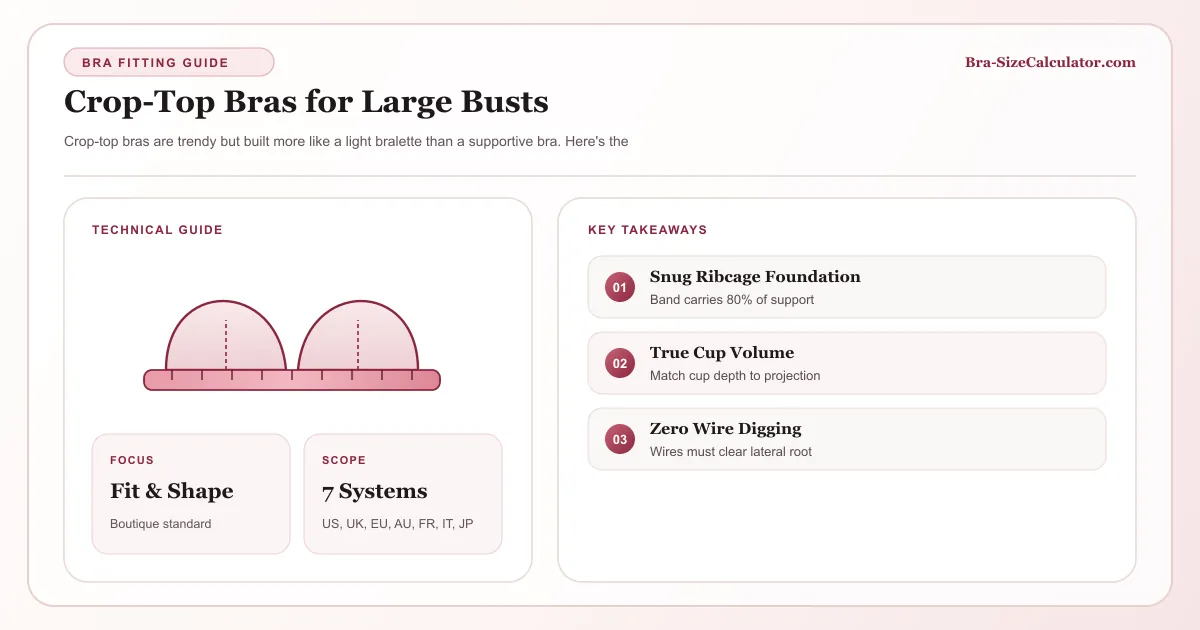
Crop tops worn as bras are having a real style moment, but underneath the trend, most are built the same way as a lightweight bralette. Stretch compression fabric with minimal internal structure. That construction has real limits as bust size increases.
Why the Trend Doesn’t Automatically Translate to Support
A crop top’s appeal is largely aesthetic. It looks like activewear, reads as a complete outfit piece, and photographs well. None of that has anything to do with whether it can actually hold and shape a fuller bust through a normal day.
What Separates a Genuinely Supportive Version
The better fuller-bust-friendly crop tops add a structured underband (rather than stretchy fabric) and individually-shaped cups rather than one continuous compression panel, in practice, they borrow real bra construction and dress it in crop-top styling.
How to Evaluate One Before Buying
Read the construction details the same way you would for a sports bra: does it mention cups, or just “compression fabric”? Is there a defined underband, or is it one continuous stretch tube?
The visual silhouette won’t tell you this. The actual construction description will.
A Reasonable Way to Wear Them
For low-movement situations (lounging, a casual day out, layering under an open jacket) a crop top can work fine even without heavy-duty support. For exercise or long days on your feet, layering it over a properly supportive bra underneath gets you the look without giving up the function.
Fabric Weight as a Clue
Heavier, denser knit fabric usually correlates with more built-in structure, since lightweight fabric alone can’t hold shape without help from separate internal construction. A crop top that feels substantial and holds its form when you scrunch it in your hand is more likely to have real structure than one that feels thin and drapes limply. A quick, practical check you can do before ever putting it on.
Return Policy Matters More for This Category
Because construction quality is hard to judge from product photos alone, and crop-top-as-bra is a newer category with less standardized sizing than traditional bras, checking the retailer’s return policy before buying matters more here than for a well-established bra style. A flexible return window makes it far lower-risk to test whether a specific crop top actually delivers real support for your size.
Combining Style and Function Without Compromise
Some fuller-bust-focused brands now build genuine sports-bra-level construction into crop-top styling specifically, rather than treating it as a fashion-only category. Searching for “supportive crop top” or checking activewear-specific brands (rather than general fashion retailers) tends to surface these more construction-focused options.
Checking customer photos (rather than the retailer’s own product shots) in reviews often reveals more about real-world fit and support than professional marketing photography ever will.
The Difference Between a Fashion Crop Top and a Supportive One
Many crop-style tops sold as bras are actually designed primarily for appearance rather than support, using stretch fabric with minimal internal structure, at fuller busts, checking for actual construction features (band elastic strength, any internal support panels) matters more than the crop silhouette itself.
Layering Considerations
If a crop top style doesn’t provide adequate support on its own, wearing a properly-fitted supportive bra underneath and using the crop top as an outer layer is a common and completely reasonable approach rather than expecting the crop top alone to do support work it wasn’t built for.
Reading Product Descriptions Carefully
Terms like ‘medium support’ or ‘light compression’ in a crop top’s description are worth taking literally. They’re often accurate signals about how much actual support to expect, regardless of how structured the item looks in photos.
A Simple Rule of Thumb
If a crop top doesn’t feel supportive standing still in the fitting room, it won’t become more supportive during actual wear. Trust that initial impression.