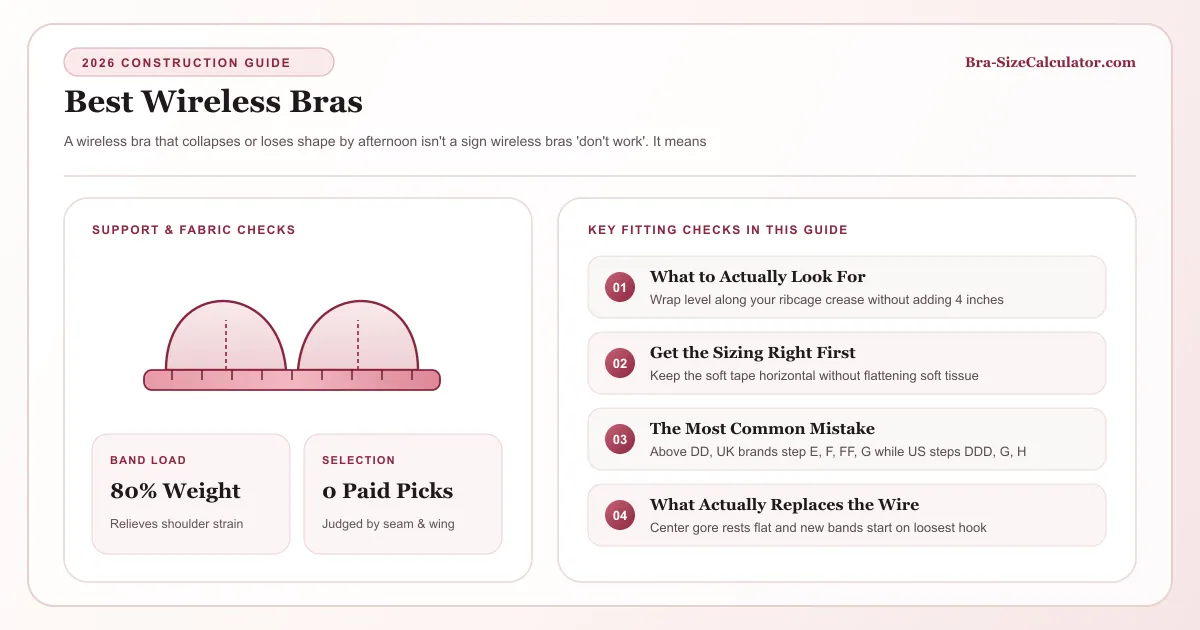
A wireless bra that collapses or loses shape by afternoon isn’t a sign wireless bras ‘don’t work’ it usually means the cup isn’t doing what the wire used to do, or the size is off.
Every calculator on this site is free, runs in your browser, and stores nothing. The same is true here. Getting your real size right fixes most of what a “best bras for X” list is really trying to solve.
What to Actually Look For
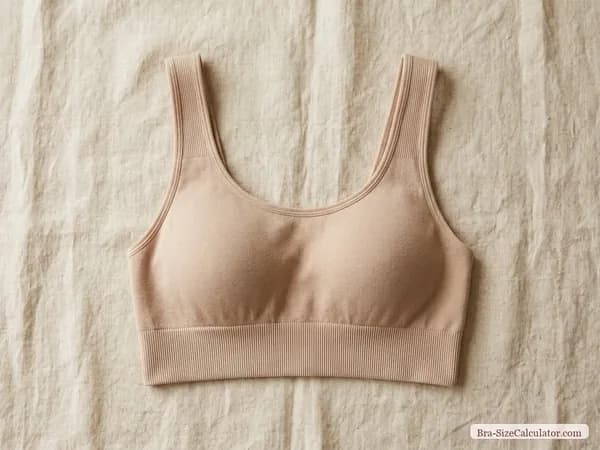
- Molded or foam cups: These hold shape on their own, replacing the structural job a wire normally does.
- A wide, supportive band: Even more important in a wireless bra, since there’s no wire to help anchor the cup.
- Structured side panels: Add shape and containment without relying on rigid wire.
Get the Sizing Right First
Wireless doesn’t mean one-size-fits-most: you need the same real band and cup number as any other bra. Molded cups are sized just as specifically as underwire ones. Start with the Main Bra Calculator.
The Most Common Mistake
Buying a wireless bra a size up ‘for comfort,’ assuming looser automatically means more comfortable. A too-big wireless bra collapses and loses shape faster than a correctly-sized one.
- Claire Bennett, 10+ years fitting women in-store before writing a single page here.
What Actually Replaces the Wire
Wide, non-stretch bands, structured (rather than soft) cup seaming, and firmer compression fabric all do the support job an underwire normally does. A wireless bra without at least one of these is just a soft, unstructured layer, not a supportive bra.
When Wireless Genuinely Doesn’t Work
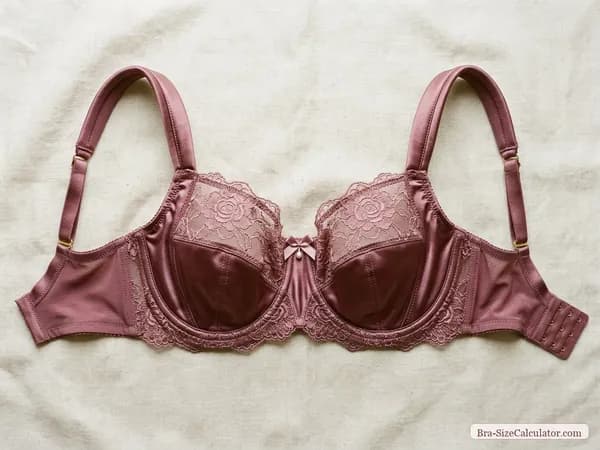
At larger cup sizes with significant weight, wireless construction sometimes can’t provide enough lift on its own, no matter how well-built. That’s a real physical limitation, not a fit mistake. Some situations still call for underwire, and that’s fine.
What Actually Replaces Underwire Support
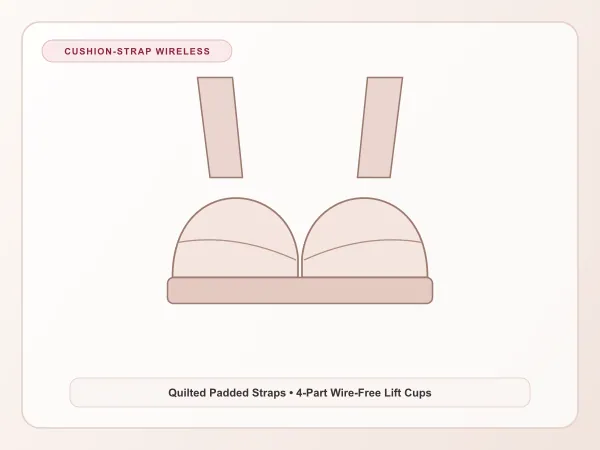
Wide, structured bands do most of the support work underwire would otherwise provide. Molded or seamed cups add shape retention without rigid structure.
Wider-set straps handle load distribution that underwire construction sometimes reduces the need for. Together, these features let a wireless design support effectively without any wire at all.
When Wireless Isn’t Enough
At larger cup volumes or during high-impact activity, wireless construction alone sometimes can’t provide adequate structure regardless of band and strap quality. This is a genuine construction limitation, not a sizing issue, and it’s honest to say wireless isn’t the right choice for every situation.
What Actually Replaces the Underwire
Wireless support typically comes from a combination of a firmer knit band, structured side panels, and sometimes a molded cup shape that holds its form without rigid support underneath. These elements can provide real support at many sizes, but they have genuine limits at higher cup volumes, where underwire’s rigid perimeter support becomes harder to fully replace.
Honest Limitations of Wireless at Fuller Cup Sizes
At the fuller end of the size chart, even well-constructed wireless bras may not provide the same lift and separation as an underwire equivalent. This is a genuine construction tradeoff, not a sign you’re using the wrong size or the wrong brand. If wireless comfort matters most, some fullness in silhouette is often the honest tradeoff.
A Growing Category With Improving Construction
Wireless engineering has improved significantly as more brands invest in structured wireless design specifically, so options that felt unsupportive a few years ago may be worth revisiting now.
Compression Level Varies a Lot Within ‘Wireless’
Not all wireless bras compress the same amount (some are nearly as structured as a wired style, others are extremely soft) so two wireless bras in your size can feel completely different depending on their specific construction.