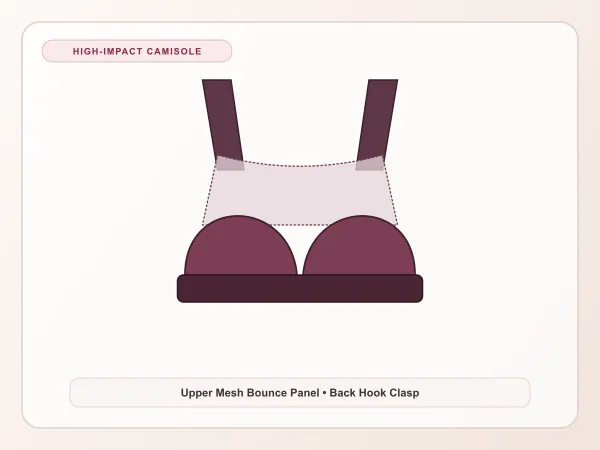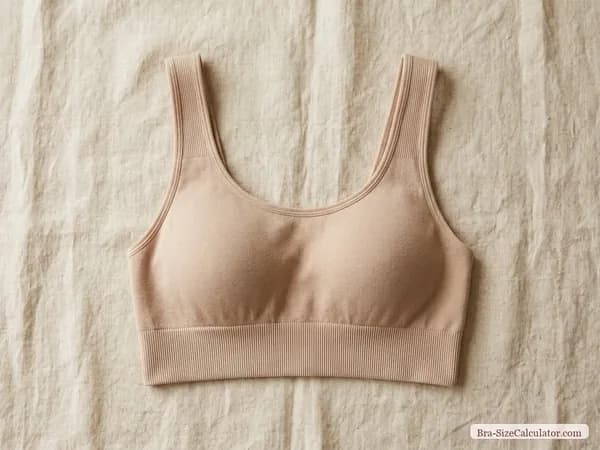
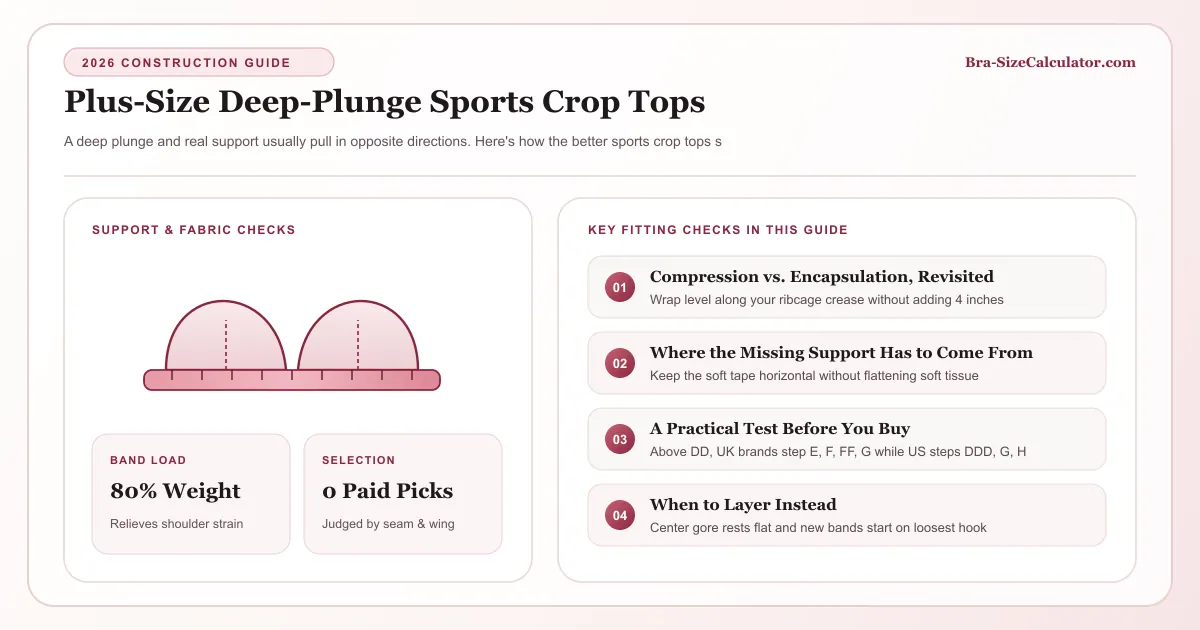
The center gore and a snug center panel do a lot of quiet support work in a standard sports bra. They hold the cups in place and stop lateral movement. A deep plunge removes that panel, which is exactly why plunge styles have a reputation for feeling under-supportive on fuller busts.
Compression vs. Encapsulation, Revisited
Compression sports bras press breast tissue against the chest wall as one mass. Simple to build, but it runs out of effectiveness as volume increases.
Encapsulation sports bras shape and support each breast individually, like a structured cup. A well-built plunge top for fuller busts almost always uses encapsulation, even with a deep neckline, because compression alone can’t do the job once the center panel is gone.
Where the Missing Support Has to Come From
Without a center panel, structure has to move to the sides and band: wider underbands, boning along the side seams, or a molded cup that holds shape independently of the neckline. These details do the job the center gore usually handles.
A Practical Test Before You Buy
Check whether the listing distinguishes “cups” (individual shaping) from a single continuous compression panel. Reviews mentioning bounce specifically during running or jumping (rather than walking) are the most reliable signal for how it performs under real movement.
When to Layer Instead
For high-impact activity at a fuller cup size, layering a supportive encapsulation sports bra underneath a plunge crop top (worn as the outer layer, not the actual support) is often more reliable than expecting one garment to do both jobs at once.
Band Elasticity Under the Bust
Without a center panel, the band directly beneath the bust does more of the stabilizing work than usual. A band with too much stretch flexes under movement instead of holding position, undoing some of the benefit of encapsulated cups above it. Look for a band described as “firm” or “compression” rather than simply “stretch-fit” when shopping for a plunge style specifically.
Layering Strategy for High-Impact Days
When layering a supportive sports bra underneath a plunge crop top, choose an inner bra with a scoop or plunge neckline of its own. A high, straight neckline underneath will show above the crop top’s edge and defeat the styling purpose. Encapsulation-style sports bras with a moderate scoop front are the easiest to hide fully under most plunge necklines.
Reading Between the Lines on Product Descriptions
Marketing copy that emphasizes the neckline (“flattering plunge,” “sexy cutout”) without mentioning band or cup construction is usually a signal the design prioritized appearance over support engineering. Descriptions that specifically name band material, cup type, or compression level alongside the style details are more likely to have been built with real support in mind, rather than only a fashion silhouette.
If the same brand offers the plunge style in multiple support levels, starting one level higher than your usual sports bra support is a reasonable way to compensate for the missing center panel.
Balancing Plunge Style With Real Impact Control
A deep-plunge neckline reduces the amount of fabric and structure available at the center of the cup, which is exactly the area that normally helps control central movement during activity. This tradeoff matters more the higher the impact level of your activity.
When Plunge Styles Work Best
Lower-impact activities like yoga, walking, or strength training tolerate a plunge design’s reduced central support far better than running or jumping-based workouts, where a more traditional high-coverage sports design usually performs better regardless of size.
Checking Bounce Before You Buy
If possible, do a few jumping jacks or a light jog in the fitting room. A plunge style that feels supportive standing still can move considerably more once you’re actually in motion, which the neckline reduction on this style makes especially worth testing.
Matching the Style to the Actual Activity
Save deep-plunge designs for lower-intensity sessions and keep a higher-coverage option on hand for anything more demanding. Having both covers most workout needs.