Why the Two Numbers Diverge
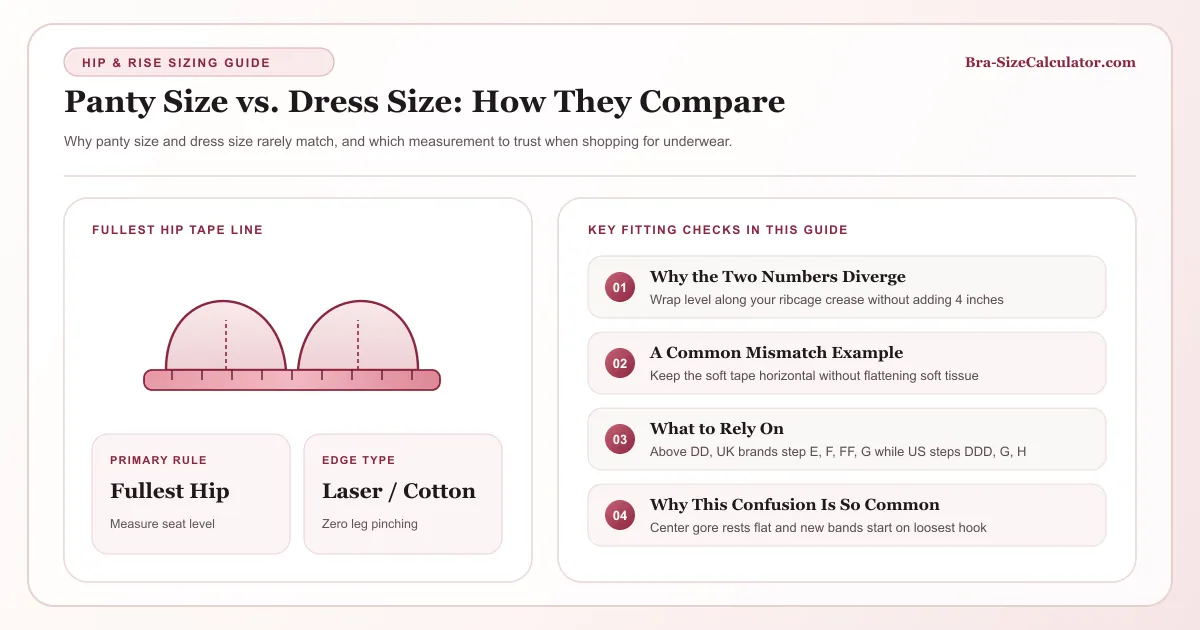
A dress size is a rough average across three measurements (bust, waist, and hip) compressed into a single number that fits a standardized body shape. Panty size ignores bust and waist and looks only at hip measurement, so anyone whose proportions differ from that standardized shape will see the two numbers disagree, sometimes by more than one size step.
A Common Mismatch Example
Someone with a smaller bust and waist but a fuller hip might wear a smaller dress size than their panty size would suggest, and the reverse happens about as often for a different body shape. Neither situation means anything is wrong with the sizing or the body. It reflects that the two systems measure different things.
What to Rely On
Use your hip measurement directly against a panty size chart rather than assuming your usual dress size carries over. If you don’t know your hip measurement, take it now. It takes under a minute and settles the question far more reliably than converting from an unrelated size system.
Why This Confusion Is So Common
Most clothing categories use a single size number, so it’s a natural assumption that one number should describe your whole body. Underwear is one of the few categories sized off a single, specific measurement instead of an averaged fit across multiple points, which is exactly why it can feel inconsistent with everything else in your closet.
A Practical Rule of Thumb
When shopping for underwear, ignore your dress size entirely and go straight to your hip measurement. Treating the two as related numbers is the most common source of a frustrating first-order mismatch, and dropping that assumption solves most of the confusion immediately.
What About Waist Size?
Waist measurement matters for high-waist styles specifically, where the band sits closer to the natural waist than the hip. For those styles, checking both your hip and waist measurement against a brand’s specific chart gives a more accurate result than relying on hip measurement alone.
Why Retailers Conflate the Two
Some clothing retailers use a single body-measurement-based sizing system across multiple garment types for convenience, which can make it look like dress size and underwear size are the same thing. In reality, dress sizing accounts for bust, waist, and hip together, while underwear sizing is driven almost entirely by hip measurement alone.
A Practical Conversion Approach
If you only know your dress size and need a rough underwear-size starting point, use the hip measurement typically associated with that dress size range as your reference, but always verify with an actual hip measurement rather than relying on the dress size alone, since body proportions vary even within the same dress size.
A Reminder Worth Repeating
No dress size reliably predicts underwear size on its own. Treat any dress-size-based estimate as a rough starting guess to be confirmed with an actual hip measurement, not a final answer.
A Final Practical Note
When shopping unfamiliar retailers, look specifically for an underwear-specific size chart rather than relying on a general body-size chart shared across multiple garment categories.