Why Hip Measurement Is the Right Number to Use
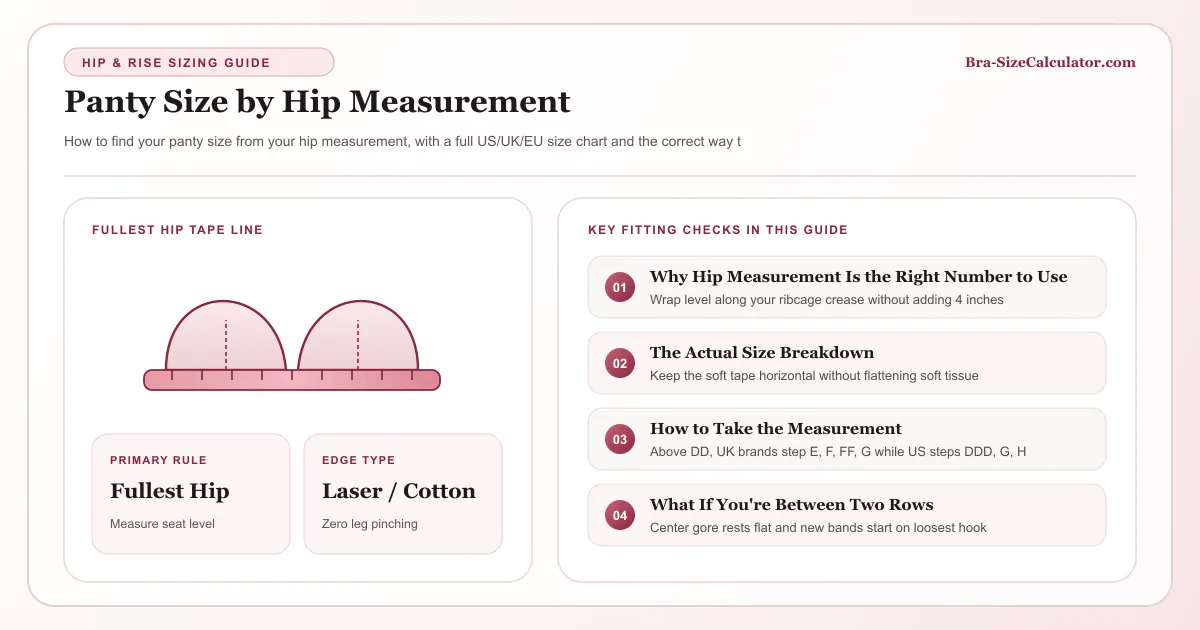
Underwear sits on the hip and seat, so the hip measurement at its fullest point is the number that determines fit, not waist size or overall body size. Two people with the same hip measurement will generally wear the same panty size even if their waist, bust, or overall build looks different.
The Actual Size Breakdown
| Hip (inches) | US Letter | US Numeric | UK | EU |
|---|---|---|---|---|
| 34″+ | XS | 0-2 | 6-8 | 34-36 |
| 36″+ | S | 4-6 | 8-10 | 36-38 |
| 38″+ | M | 8-10 | 10-12 | 38-40 |
| 40″+ | L | 10-12 | 12-14 | 40-42 |
| 42″+ | XL | 12-14 | 14-16 | 42-44 |
| 44″+ | 1X | 14-16 | 16-18 | 44-46 |
| 46″+ | 2X | 16-18 | 18-20 | 46-48 |
| 48″+ | 3X | 18-20 | 20-22 | 48-50 |
How to Take the Measurement
Wrap a soft tape measure around the fullest part of your hips and seat, keeping the tape level and snug but not compressing the skin. Take the measurement standing with feet together, since your hip measurement can shift slightly depending on stance.
What If You’re Between Two Rows
If your measurement sits close to the boundary between two sizes, think about how you want the underwear to feel: sizing up gives more room and a looser, longer-wearing comfort, while sizing down gives a snugger, closer fit. Both are valid choices depending on preference, not a right-or-wrong situation.
Hip Measurement Changes Over Time
Hip measurement shifts with weight change, pregnancy, and simply time, more than most people expect. Re-measuring every so often (rather than assuming a measurement taken years ago still applies) keeps your size accurate without relying on trial and error every time you shop.
Measuring Accurately Matters More Than the Chart Itself
A chart is only as useful as the measurement you check against it. A hip measurement taken too tightly, over thick clothing, or with uneven posture will point you to the wrong row regardless of how accurate the chart is. Revisit the actual measuring technique if a chart-based size consistently doesn’t match how things fit in practice.
What If You’re Between Two Sizes
When your hip measurement falls right between two sizes, sizing up is usually the safer default for comfort, especially in styles with less stretch. A slightly loose fit is more comfortable to live with than one that’s genuinely too tight.
What If Your Waist and Hip Measurements Don’t Match the Typical Ratio
Most size charts assume a fairly average waist-to-hip ratio. If your waist is notably smaller or larger relative to your hips than average, prioritize the hip measurement for the base size, then look specifically for styles or brands that offer additional waist customization (drawstrings, adjustable sides) rather than trying to split the difference between two standard sizes.
Re-Measuring After Body Changes
Pregnancy, weight change, and even significant changes in exercise routine can shift hip measurement enough to move you into a different size range. There’s no fixed schedule for re-measuring, but if your usual size starts feeling different (tighter, looser, digging in differently than before), that’s a reliable cue to measure again rather than assuming your old size still applies.
Save Your Hip Measurement Alongside the Size Label
Recording your actual hip measurement in inches or centimeters (rather than the resulting size label) makes it much easier to accurately convert across different brands’ varying charts in the future.
Measurement Beats Memory
Even if you’re confident you remember your size, a quick re-measurement before a big order costs a minute and prevents an avoidable mistake from an outdated assumption.