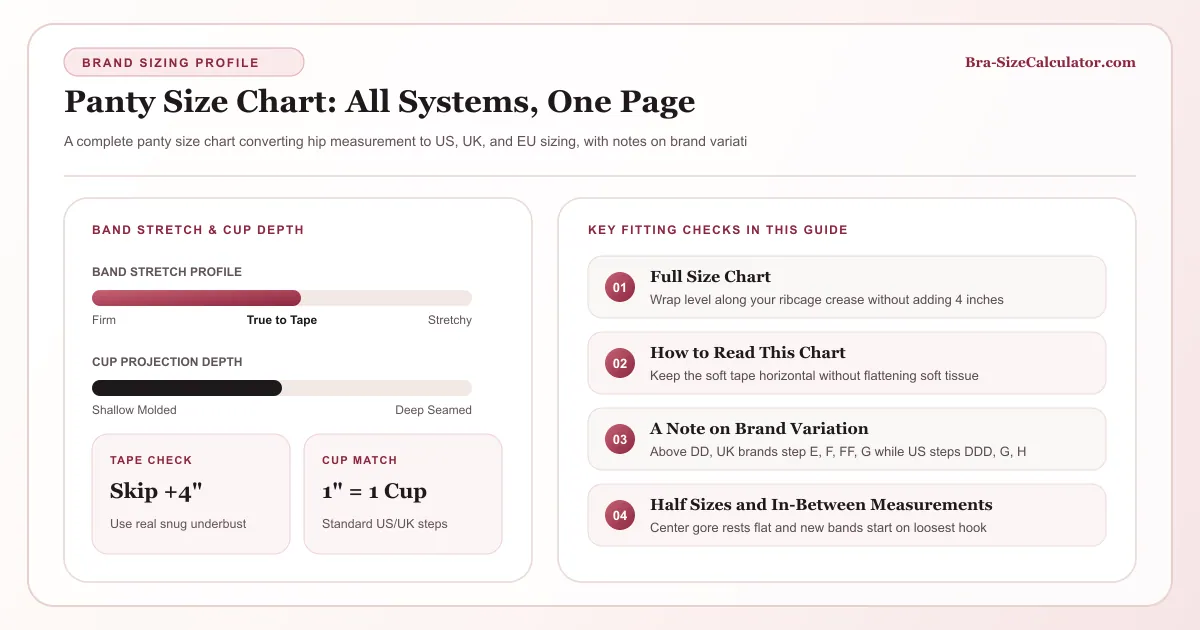
Full Size Chart
| Hip (inches) | US Letter | US Numeric | UK | EU |
|---|---|---|---|---|
| 34″+ | XS | 0-2 | 6-8 | 34-36 |
| 36″+ | S | 4-6 | 8-10 | 36-38 |
| 38″+ | M | 8-10 | 10-12 | 38-40 |
| 40″+ | L | 10-12 | 12-14 | 40-42 |
| 42″+ | XL | 12-14 | 14-16 | 42-44 |
| 44″+ | 1X | 14-16 | 16-18 | 44-46 |
| 46″+ | 2X | 16-18 | 18-20 | 46-48 |
| 48″+ | 3X | 18-20 | 20-22 | 48-50 |
How to Read This Chart
Find your hip measurement in the left column, taken at the fullest point of your hips and seat, then read across for your size in whichever system you need. If your measurement falls between two rows, the higher size generally offers more comfort, while the lower one gives a snugger fit.
A Note on Brand Variation
This chart reflects common sizing conventions, but individual brands can shift a size or half-size in either direction depending on their own cut and fabric choices. Treat this as a reliable starting point, and check a specific brand’s own chart for anything you’re unsure about.
Half Sizes and In-Between Measurements
If your hip measurement falls between two rows on the chart, sizing up generally gives a more comfortable, longer-lasting fit, while sizing down gives a snugger, more second-skin feel. Neither is more “correct,” it’s a preference between comfort and closeness of fit.
Why the Same Letter Size Still Varies by Brand
Two brands both labeling a garment “Large” can target different actual hip ranges, since there’s no single enforced industry standard the way there sometimes is for other clothing categories. Treating this chart as your starting hip-measurement reference (rather than assuming “Large” means the same number everywhere) avoids most of the frustration that comes from switching brands.
Using This Chart Alongside the Calculator
This chart is a quick lookup, but the Panty Size Calculator does the same conversion instantly from your exact measurement instead of rounding to the nearest chart row. For a measurement that falls right on a boundary, the calculator and this chart will agree. The difference only matters when you’re between two rows and want to see both nearby options at once.
Reading a Chart Correctly
A chart only gets you as far as your actual measurement is accurate. Measure over minimal clothing, keep the tape parallel to the floor, and re-check the number if it feels off rather than assuming the chart is wrong.
Reading the Chart by Body Type
A hip-measurement chart works well for most body types, but if your waist-to-hip ratio is unusually high or low compared to average, the resulting size may fit the hips well but feel different at the waist. In that case, prioritize the hip measurement for the primary size, then check reviews for waist-specific fit notes on that style.
When Charts Disagree Between Brands
Two brands can list the exact same hip measurement range under different size labels. One calling 40 inches “Large,” another calling it “XL.” This isn’t an error, just different labeling conventions, which is exactly why measuring your actual hips and checking each brand’s specific chart matters more than assuming your usual letter size carries over.
Keep a Personal Reference Note
Once you’ve found your reliable size in two or three specific brands, keeping a short personal note of those brand-specific sizes saves you from re-measuring every single time you shop a familiar retailer.
Charts Improve With Your Own Data
Over time, cross-referencing your actual fit experience against multiple brands’ charts builds a more personalized sense of which brands run true, small, or large for your specific proportions.