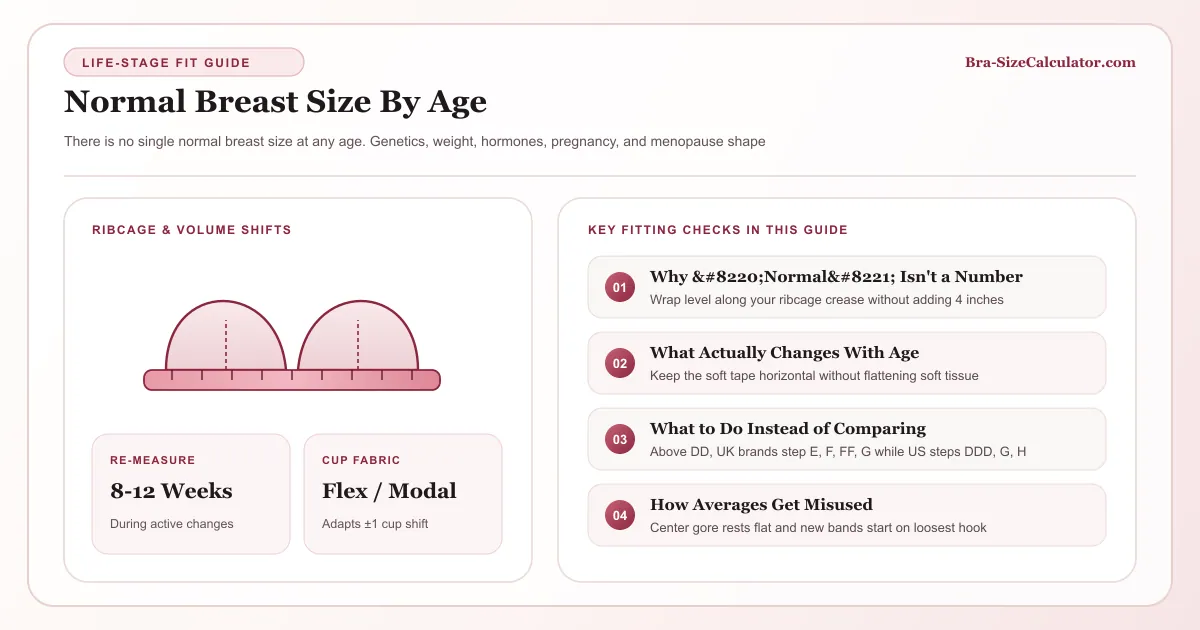
There is no single normal breast size at any age. Size varies enormously from person to person and changes throughout life due to genetics, weight, hormones, and pregnancy, not a fixed age-based schedule.
Free, private, no signup: every calculator and guide on this site runs in your browser. Nothing is stored.
Why “Normal” Isn’t a Number
Breast size is influenced by genetics, body fat distribution, hormone levels, and life events, not a clock that ticks the same way for everyone. Two people the same age can have completely different, equally normal sizes.
What Actually Changes With Age
Puberty is when breast tissue develops, typically between ages 8 and 13, though this range varies widely and is completely normal on either end. In the 20s and 30s, size can shift with weight changes, pregnancy, and breastfeeding. Around perimenopause and menopause, changes in fat distribution and skin elasticity often affect shape and firmness more than cup size itself.
What to Do Instead of Comparing
Rather than looking for a target size for your age, measure what you actually have right now with the Main Bra Calculator and buy for that. Fit changes over time for everyone. The goal is a bra that fits today, not a size that matches an average.
How Averages Get Misused
Marketing and casual comparisons often turn a statistical average into an implied target, as if there’s a size you’re supposed to be at a given age. Averages describe a population, not a person, and they say nothing about what’s right for your body specifically.
When a Change Is Worth Mentioning to a Doctor
Gradual shifts from weight, hormones, or aging are normal and not something to flag. A sudden change in one breast only, a new lump, skin dimpling, or unexplained pain are different. Those are worth a real conversation with a doctor, not a bra-fit calculator.
Comparing yourself to a chart or a friend rarely helps day to day. The only number worth acting on is your own current measurement, checked against the Main Bra Calculator, not an age-based expectation.
Why This Page Won’t Give You a Number
Any chart claiming to show the “average” or “normal” size for a given age is combining enormous individual variation into a single misleading figure. Genetics, body weight, pregnancy history, and simple natural variation matter more than age alone at determining someone’s size at any point in life.
What Does Reliably Change With Age
While the actual size varies enormously person to person, some patterns are common across many people: continued development in the teens and early 20s, potential changes around pregnancy and breastfeeding in the 20s-40s, hormonal fluctuation in perimenopause, and gradual tissue composition changes from menopause onward. These are tendencies, not rules every individual follows.
Age-Specific Guides on This Site
If you want more detail for your own decade, dedicated guides exist for Teens, the 20s, 30s, 40s, 50s, and 60 and beyond- each covering what tends to be different about that specific stage.
Debunking the ‘Average’ Myth
There is no single “normal” breast size for any age group. The range of genuinely typical sizes at any given age is far wider than most casual references suggest, and framing any specific number as the standard to expect sets up an inaccurate and unhelpful comparison point.
What Actually Varies vs What’s Consistent
What varies significantly by age is the *rate and likelihood* of change (teens changing faster due to development, older adults experiencing hormonal-tissue shifts), not a specific target size someone should reach by a certain age. The measuring and sizing process itself stays completely consistent regardless of age.
Why This Page Deliberately Avoids Giving a Single ‘Typical’ Number
Every age-specific page linked from here goes into more depth on that particular decade’s common patterns and drivers of change. The deliberate choice not to present one overall ‘average’ size here, on this general overview page, reflects how genuinely wide normal variation is at every single age.
Using Decade-Specific Pages Alongside a Fresh Measurement
The most useful path is reading the page for your current decade for context on what commonly drives change at that stage, then using an actual fresh measurement (not memory of an old size) as the number you actually shop and size against.
The Real Takeaway
If there’s one thing worth remembering from this page, it’s that comparison to any average or typical number is far less useful than simply knowing your own accurate, current measurement.