How Sizing Needs Change Trimester by Trimester
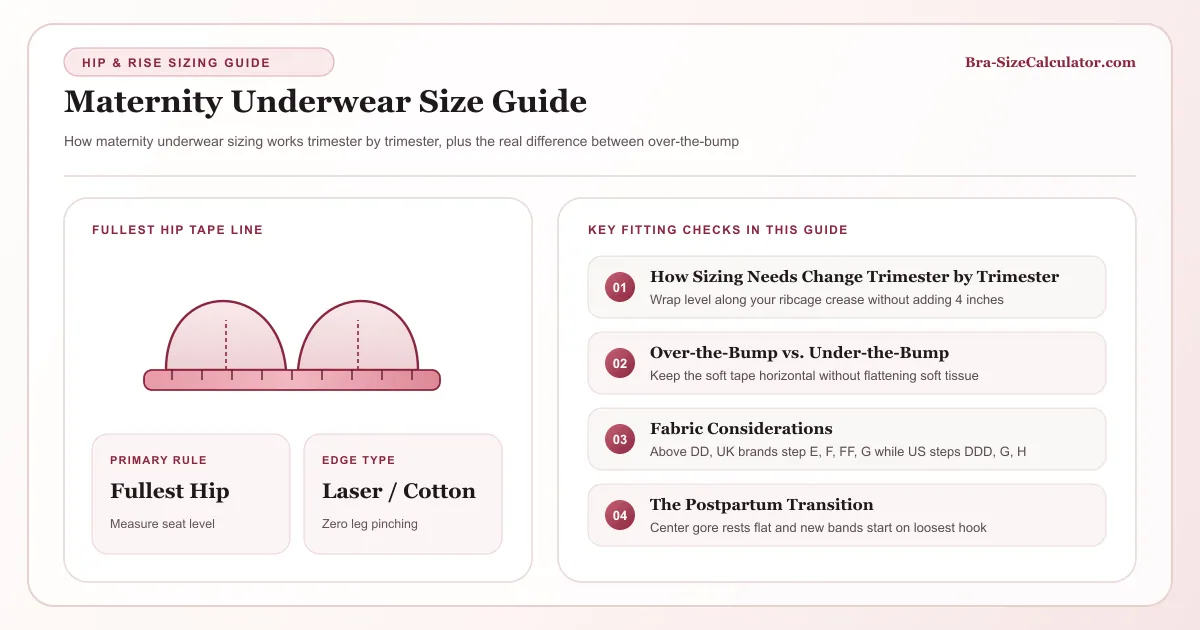
Early pregnancy rarely changes hip measurement enough to need a size change on its own. By the second trimester, growing belly and hip width start to matter more than your pre-pregnancy size ever did. Re-measuring every few weeks in the second half of pregnancy keeps you ahead of the shift instead of buying a size too small out of habit.
Over-the-Bump vs. Under-the-Bump
Over-the-bump styles use a stretch panel that sits above the belly, offering support and coverage through the third trimester. Under-the-bump styles sit low on the hips, below the belly, and stay comfortable longer if you find belly bands or high panels irritating against sensitive skin. Neither is objectively better: comfort and personal preference decide which works for you.
Fabric Considerations
Skin sensitivity often increases during pregnancy, so soft, breathable cotton blends tend to hold up better than synthetic fabrics for everyday wear. Look for a wide, soft waistband rather than a narrow elastic edge, since a narrow band digs in more as your body changes week to week.
The Postpartum Transition
Many people continue wearing over-the-bump or under-the-bump styles for some time after delivery, since the abdomen doesn’t return to a pre-pregnancy shape immediately. Postpartum-specific styles with a soft, wide waistband positioned to sit comfortably over a healing C-section incision (if applicable) are worth considering separately from regular maternity underwear.
What to Buy Before vs. After Delivery
Before delivery, buying by current hip measurement in small batches (rather than a large supply at once) accounts for how much sizing needs can shift week to week in the third trimester. After delivery, waiting a few weeks before buying a larger postpartum-specific supply avoids over-buying a size that may only be needed briefly during the transition.
Comfort Signals to Watch For
Redness, indentation marks, or a waistband that feels like it’s pressing rather than gently holding are all signs it’s time to size up, regardless of how far along the pregnancy is or what size you wore before. Comfort in the moment is a more reliable guide during pregnancy than sticking to a size chosen weeks earlier.
Sizing Through Each Trimester
Early pregnancy often requires no size change at all, since hip measurement typically shifts less than waist measurement in the first trimester. By the second and third trimesters, many people move to maternity-specific styles with stretch panels that accommodate a growing waist and hip measurement without needing multiple full size changes along the way.
Postpartum Transition Considerations
Hip measurement often doesn’t return to pre-pregnancy numbers immediately after delivery, and swelling in the early postpartum weeks can temporarily increase sizing needs further. Waiting a few weeks before buying a full new wardrobe in a “final” size, and using stretch-panel styles in the interim, avoids buying multiple sizes during a period when the number is still settling.
Buy Gradually Rather Than All at Once
Given how much sizing needs shift throughout pregnancy, buying a small quantity at each stage rather than a large wardrobe upfront avoids ending up with items that no longer fit by the time you’d wear them.
Comfort Over Convention
There’s no need to stick rigidly to maternity-specific labeling if a regular style in a larger size feels more comfortable. Comfort and fit should guide the decision more than the product category label.