By Bra Fit Educator Claire Bennett
BraSizeCalculatorHonest Bra Fit Guides
Bra Fit Troubleshooting

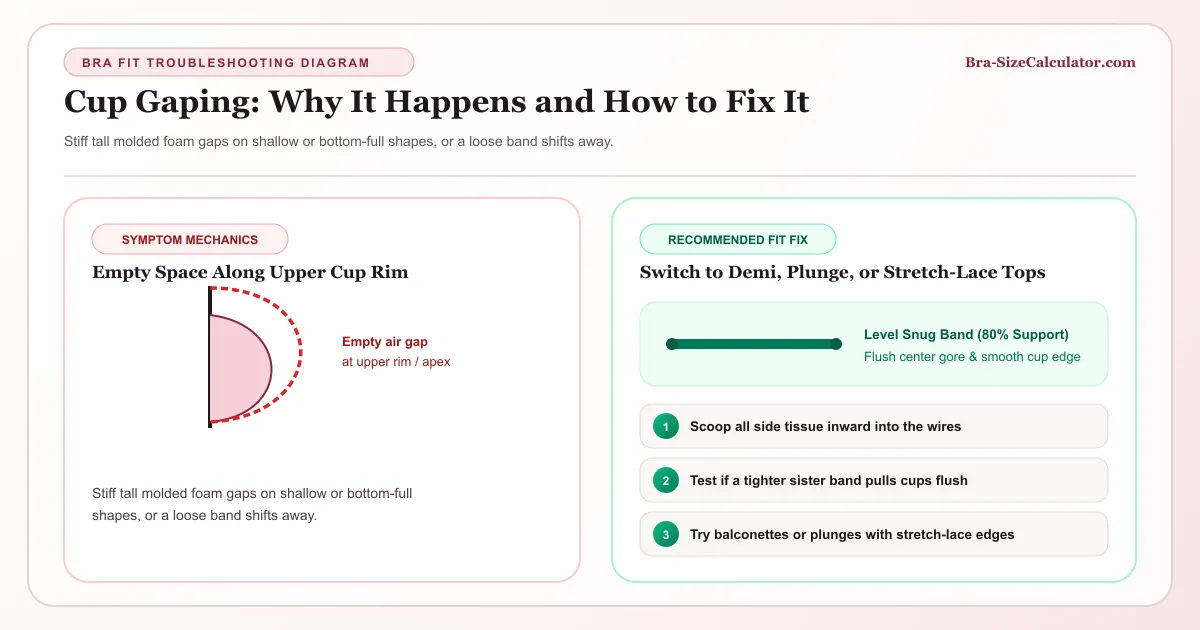
Cup Gaping: Why It Happens and How to Fix It

Gaping at the top of the cup almost always means the cup is too big for your actual volume, not that your shape is unusual.

By Claire BennettReviewed by Sizing & Chart Review Desk3 min read
Direct Fit Answer

Gaping at the top of the cup almost always means the cup is too big for your actual volume, not that your shape is unusual. Sizing down in the cup, or trying a different cup shape, usually solves it.

Cup Gaping: Why It Happens and How to Fix It reference chart
Fit Symptom & Fix
Stiff tall molded foam gaps on shallow or bottom-full shapes, or a loose band shifts away. Switch to Demi, Plunge, or Stretch-Lace Tops.Bra-SizeCalculator.com Guide

Want the exact size adjustment for your current bra?

Enter your current bra size in our tape-free Smart Fit Diagnostic to see which size to try next.

Check My Size

Why This Happens

A cup is designed to fully contain your breast tissue with the fabric lying flat against your skin.

When there’s empty space at the top or side, the cup itself is larger than the breast it’s holding.

How to Confirm It’s the Cup

  • You can fit more than a finger’s width of loose fabric at the top of the cup.
  • The band fits well, so it isn’t a band-size issue.
  • The gap is worse in certain styles than others, which points to fit rather than shape.

The Fix

Try a sister size down in the cup (same band, one cup letter smaller) as a first move.

If gaping persists across sizes, the cup shape may not match your projection: a shallower balconette cup often fits better than a rounded full-coverage cup for some shapes.

When It Might Be Something Else

Gaping only on one side is common (most people have some natural asymmetry) and is usually solved by fitting to the larger side and using a removable pad on the smaller one, not by changing the overall size.

The 30-Second Self-Check

Look in a mirror straight on, arms at your sides. Slide one finger under the top edge of the cup. If it slides in with obvious loose fabric bunching above it (rather than only a snug fit against skin) the cup has more room than your breast needs.

Cup Shape vs. Cup Size

Gaping that shows up in every single style you try usually means the size is wrong. Gaping that only shows up in some styles but not others (say, full-coverage bras gape but balconette ones don’t) points to shape rather than size: your projection doesn’t match that particular cup’s construction, even though the volume is correct.

Padded or lightly lined cups can mask minor gaping by holding their shape regardless of what’s underneath, which is worth knowing if you like a specific unlined style that keeps gaping on you.

A Quick Self-Check

Look straight down into the cup (not in a mirror) while wearing the bra normally. Genuine gaping shows as visible empty space anywhere in the cup, rather than only at one specific spot. Press gently on the fabric; if it collapses inward with room to spare, the cup is oversized for your actual volume.

How to Tell This Apart From Similar Problems

Cup gaping is often confused with empty-cup-space, but they’re not identical: general gaping can appear anywhere in the cup and usually means the whole cup is too big, while empty-cup-space specifically refers to persistent flatness at the very top (upper pole) even when the rest of the cup fits. That narrower version is more often a shape/projection mismatch than a pure sizing issue.

What to Try First

If the gap is small, a lightly padded or push-up style in the same size can sometimes fill the space acceptably, but persistent or large gaps are better solved by going down one cup letter and reassessing fit from there.

A Realistic Example

A common scenario: someone loses a modest amount of weight, and their band still fits (ribcage didn’t change much) but the cup now gapes noticeably, since cup volume responded to the weight change faster than band size did. This is a normal pattern worth recognizing rather than assuming the original size was always wrong.
Bras That Help Fix This Fit Issue

#1
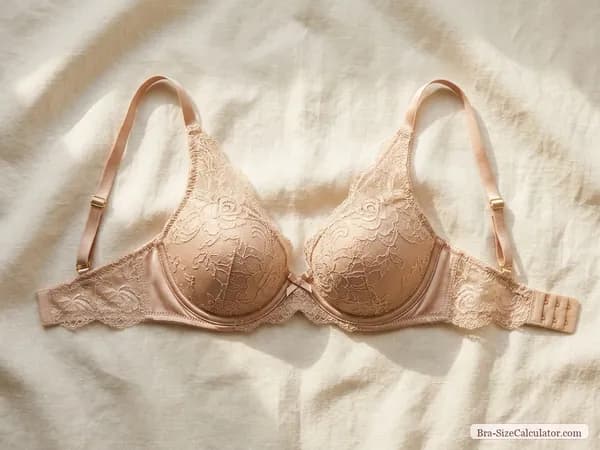
Champagne blush deep-plunge contour underwire bra with flat scalloped floral mesh-lace trim on linenEditor's ChoiceUnderwire
ShallowTeardropEast-West
NatoriShallow, Petite & Close-to-Wide Set
$48 – $72

Natori Women's Feathers Contour Plunge Bra

4.6
•14,890+ Amazon ratings (snapshot)

A light everyday plunge bra with soft mesh-lace edges that lie flat against your chest. It won't gap at the top when you lean forward.

Claire's Fit Note: The band runs true to size, while the cup runs half a size shallow. If you're between two cup letters, pick the larger one.
Why We Like It:
  • Lace edge lies flat on shallow, athletic, or teardrop shapes
  • Low center gore stays hidden under V-neck tops
  • Soft stretch-lace band smooths the back without rolling
Keep in Mind:
  • Too shallow for very projected G+ cup shapes
  • Needs a wash bag or hand washing to protect the lace
Free Prime Try-On & Easy Size Exchanges on Amazon
Check Price on Amazon
#2
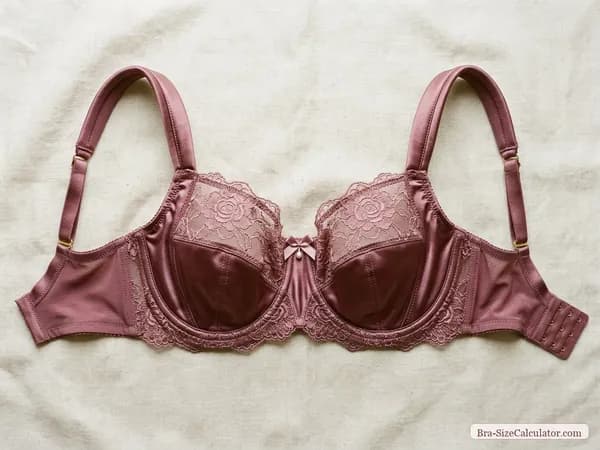
Rosewood two-part seamed floral lace full-figure underwire bra with tall center gore and wide strapsTop Pick for Large BustUnderwire
ProjectedPendulousRelaxed
WacoalFull Bust Lift & Forward Projection (C–H)
$44 – $68

Wacoal Women's Retro Chic Full-Figure Underwire Bra

4.6
•11,240+ Amazon ratings (snapshot)

Built for fuller busts that need real forward lift. Two-part seamed cups with inner side panels bring breast tissue forward and away from your arms.

Claire's Fit Note: Uses US sizing. Wacoal bands feel firm on day one so they hold their support over months of wear.
Why We Like It:
  • Strong upward lift and a centered shape under shirts
  • Centered back straps stay on your shoulders
  • Tall center gore rests flat against your chest bone
Keep in Mind:
  • Seamed lace gives a classic lifted shape instead of round foam
  • High center gore shows under low plunge necklines
Free Prime Try-On & Easy Size Exchanges on Amazon
Check Price on Amazon

Frequently Asked Questions

It's common with certain shapes, but the right cup shape (rather than size) usually closes most of the gap.

Related Fit Problems

About the FitterChecked Across 7 Sizing Systems
Updated: November 2026
Written & Reviewed ByClaire Bennett• Bra Fit Educator & Founder

Claire Bennett spent over 10 years fitting women in specialty lingerie shops before starting Bra-SizeCalculator.com. She isn't a doctor, and she doesn't make up fake credentials. She shows the exact tape math behind every result so you can shop without guesswork.

10+ Years In-Store Boutique Fitting7 Global Sizing Systems CheckedUnsponsored Fit GuidesHow Our Sizing Works
SC
Chart CheckSizing & Chart Review Desk• Brand Chart & Conversion Verification

Our sizing desk checks US, UK, EU, French, Italian, Australian, and Japanese conversion tables against current brand size charts. [ADD REAL DATA: optional secondary reviewer name and background]