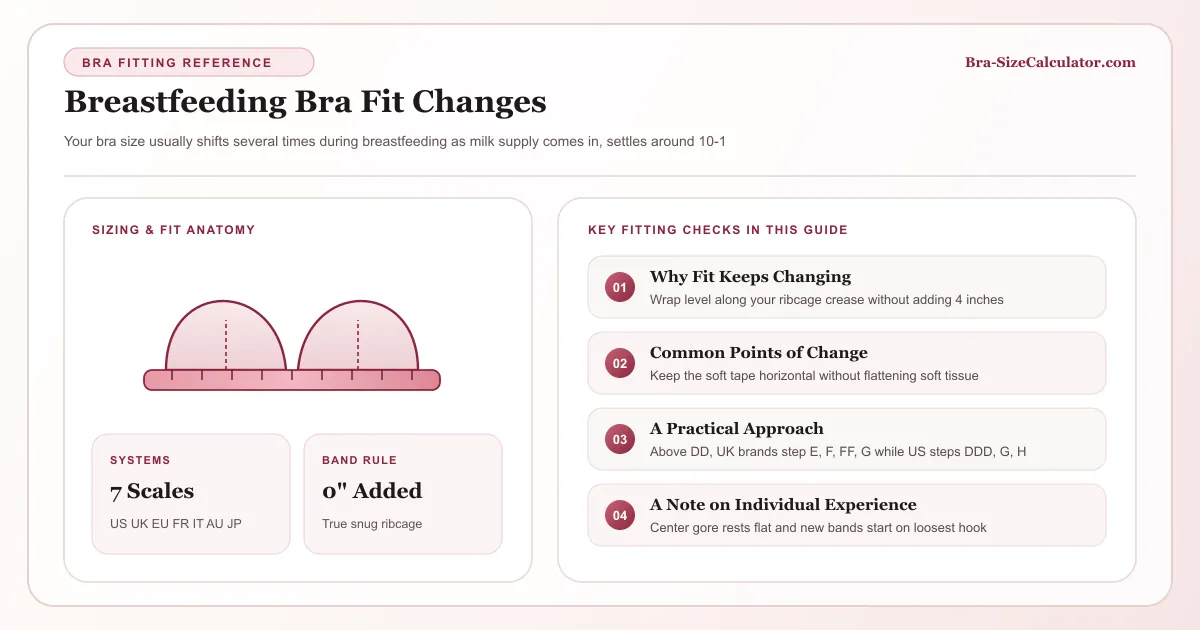
Why Fit Keeps Changing
Breast volume during breastfeeding responds to supply and demand, which itself shifts across weeks and months. This is different from a single postpartum size change and more like an ongoing, gradual process.
Even day to day, size can vary somewhat between a full and recently-fed breast.
Common Points of Change
- The initial postpartum shift, in the first couple of weeks.
- Regulation, typically around 10-12 weeks, when day-to-day swings shrink.
- Any major change in feeding pattern (starting solids, dropping night feeds, pumping less).
- The weaning process itself, often the biggest single shift.
A Practical Approach
Rather than trying to lock in one perfect size, many people find it more practical to have a few adjustable, stretchy options through the changing periods, saving a more precisely fitted wardrobe for after things stabilize.
Re-measuring every few months during active breastfeeding is a reasonable check-in, not something to overthink.
A Note on Individual Experience
How much and how often size changes varies widely between individuals. There’s no single ‘normal’ pattern everyone follows.
What Changes Beyond Simple Volume
Beyond overall size, breast shape and fullness distribution can shift meaningfully while nursing (often fuller lower and flatter upper compared to a pre-pregnancy shape) which can mean a different cup shape (rather than a different letter) fits better during this period even at a similar overall size.
After Weaning
Size and shape can continue changing for some time after weaning as milk-related fullness resolves, so a final re-measure once things have settled post-weaning is worth doing rather than assuming mid-nursing sizing is permanent.
Growth Spurt or Regulation? How to Tell the Difference
A sudden day or two of extra fullness that settles back down within 48-72 hours usually points to a feeding pattern change or a baby’s growth spurt, not a true size shift. A gradual change that holds steady over two or more weeks is more likely a genuine regulation shift worth acting on with a new size.
Waiting a couple of weeks before buying anything new after a change you notice is a reasonable way to avoid resizing for a temporary swing.
Nighttime Considerations While Nursing
A daytime bra with structure and underwire is rarely the right choice for overnight. Soft, wireless, pull-over styles with light compression tend to work better for sleep, since they accommodate fullness changes between night feeds without digging in while lying down.
Pad inserts sized slightly generous for overnight leaking are worth considering separately from your daytime nursing bra sizing.
Fabric and Seam Choices Matter More Right Now
Skin sensitivity during active breastfeeding is common, and seams that sit directly over the nipple area or scratchy lace trim can cause real irritation that has nothing to do with size. Smooth, seam-free cups and soft, breathable fabric are worth prioritizing over style during this period, even if that means a plainer wardrobe for a while.
How Fit Shifts Across a Feeding Session
Many people notice a real, temporary size difference between a full breast right before a feed and a more empty one right after. This isn’t a sizing error, it’s just how lactation works, and it’s part of why a bra with real adjustment range (multiple hooks, some stretch) serves better than a rigid, exact-fit style during this period.
When to Expect the Next Real Change
Beyond the day-to-day feeding cycle, expect a bigger shift around the time milk supply regulates (often several weeks in) and again around weaning. Both are genuine transition points where re-measuring, rather than only tolerating discomfort, is the right move.
A Realistic Scenario Worth Knowing
A common pattern: milk lets down on one side while feeding on the other, temporarily changing that side’s fullness mid-feed. Using breast pads and expecting a brief window of extra fullness on the non-feeding side during active letdown is normal, not a sign of a sizing problem.