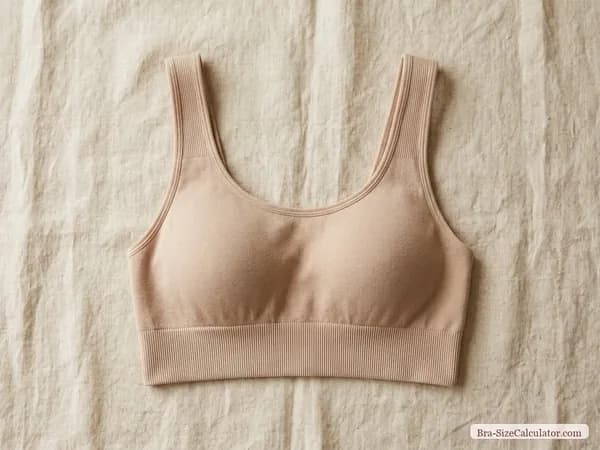
A wire-free, medium-support bra in a stretchy racerback style gives the range of motion yoga needs without the bounce-control bulk of a running bra.
Why Yoga Needs Different Support Than Running
Yoga involves deep breathing, twisting, and overhead reaching rather than repetitive bounce, so the priority shifts from bounce control to flexibility and breathability. A bra built like a running bra can feel restrictive during a deep twist or backbend.
Features to Prioritize
Wire-free construction so nothing digs in during forward folds. Stretch fabric that moves with you rather than fighting the pose.
A racerback or crossback strap style that doesn’t slip during downward dog or overhead stretches. Enough coverage that you’re not adjusting mid-flow.
Sizing Notes
Because yoga bras are often looser-fitting by design, go by how it feels through a full range of motion rather than the size label alone. If you’re unsure of your starting point, the Main calculator gives you a true size to compare against the yoga bra’s stretch and give.
Wire-Free Doesn’t Mean No Support
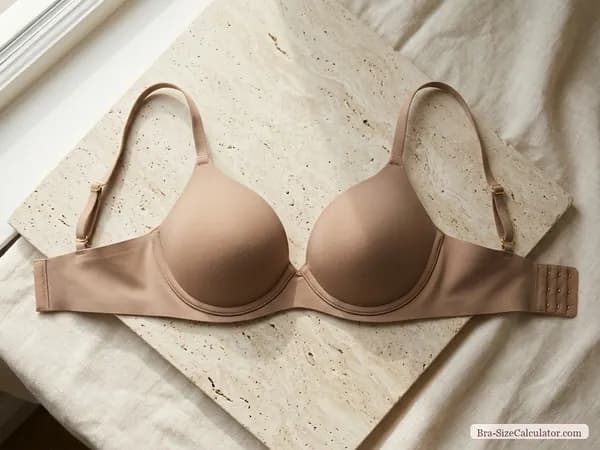
Wire-free doesn’t have to mean unsupportive. Wide underbands, structured side panels, and molded (not only soft) cups all add real support without the rigidity of underwire, which can dig in during deep twists and backbends.
Layering for Studio Temperature Swings
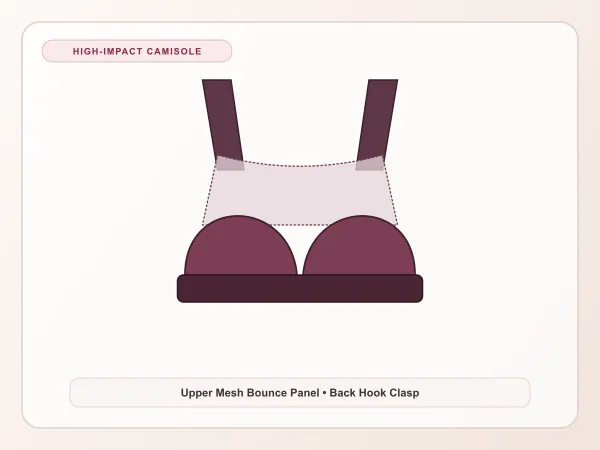
Hot studios call for breathable mesh panels; cooler studios benefit from a slightly thicker fabric that doesn’t feel clammy once you cool down after class. The right choice depends more on your studio’s climate than on the style of yoga itself.
If a yoga bra still restricts a deep twist or overhead reach after trying a few styles, the band size (not the style) is usually the real culprit.
What Yoga Demands From a Bra
Yoga involves a wide range of overhead and twisting movement, which means straps and bands need to stay in place through motion, not only standing still. Compression-style construction (rather than heavy encapsulation) usually works well since it moves with the body instead of fighting it.
Construction Details That Matter
Wide, non-slip elastic at the band bottom keeps things from riding up during forward folds and inversions. Racerback or crossback strap configurations stay put better through overhead reaches than standard straight-back styles, since they distribute pull differently across the shoulders.
Why Yoga Has Different Support Needs Than Running
Yoga involves a wide range of motion (reaching overhead, twisting, forward folds) rather than the repetitive vertical bounce of running, so support priorities shift toward flexibility and unrestricted movement rather than maximum compression. A bra that’s too rigid can actually interfere with certain poses.
Construction Features That Matter for Yoga Specifically
Four-way stretch fabric that moves with you through twists and extensions, a band that stays in place during inversions and forward folds without riding up, and racerback or crossback strap styles that don’t slip during overhead arm positions all matter more here than pure compression strength.
Support Level Considerations by Bust Size
Fuller busts generally still need meaningful compression or encapsulation even for lower-impact yoga, since certain poses (forward folds, inversions) still involve real gravitational movement. Don’t assume yoga always means minimal support regardless of size. Smaller busts have more flexibility to prioritize pure comfort and range of motion over structural support.
Common Mistakes When Shopping for Yoga Bras
Choosing a bra based purely on aesthetic (many yoga bras are designed to be seen, styled as standalone tops) without checking actual support level for your size and practice intensity is a common issue. A beautiful strappy-back design that lacks real support underneath won’t hold up through a vigorous vinyasa flow.
Considering Studio Temperature
Heated yoga practices add another layer to fabric choice. Moisture-wicking performance matters even more in a heated room than in a standard-temperature class, since sweat volume increases significantly.
Testing a few sun salutations or a forward fold in the fitting room, rather than only standing still, reveals whether a style will actually hold up through a real practice.