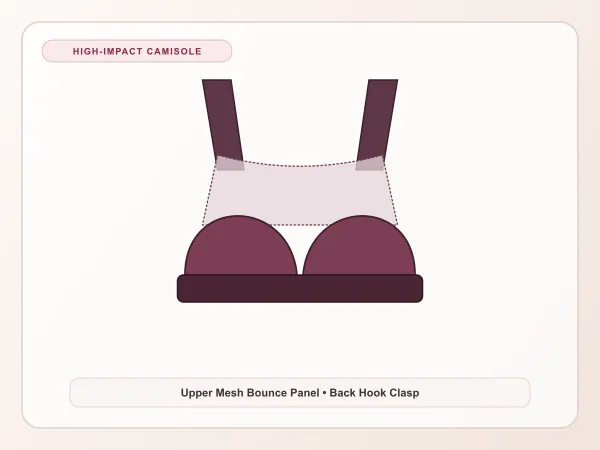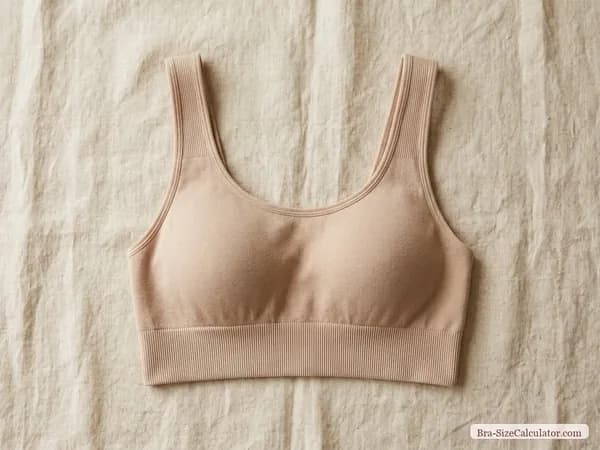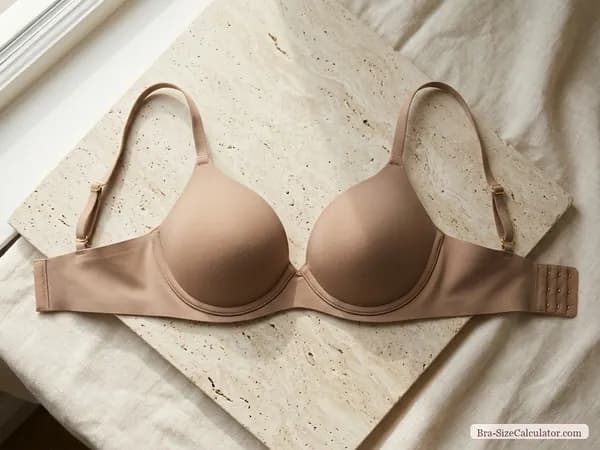
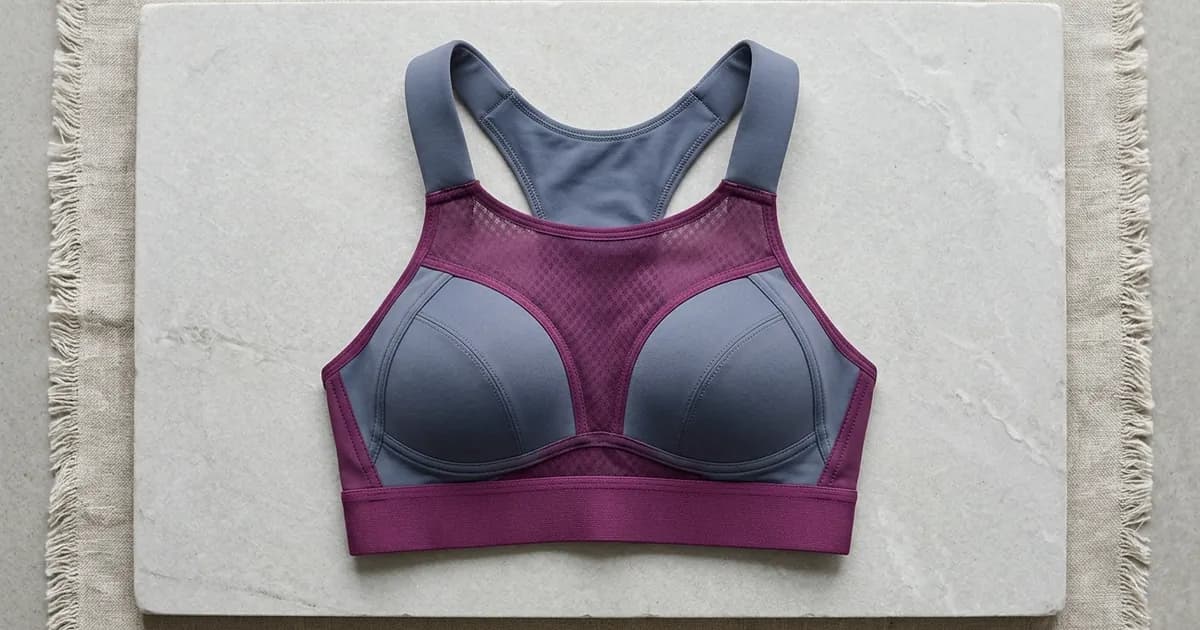
For running, look for an encapsulation-style sports bra (separate molded cups) if you’re a C cup or larger, or a compression bra if you’re smaller. Encapsulation controls bounce better for a fuller bust.
Encapsulation vs. Compression
Compression bras flatten the bust against the chest. Fine for a smaller cup size, but it can push a fuller bust outward instead of controlling it. Encapsulation bras have individually molded or seamed cups that support and separate, which is the reason most high-impact bras for larger cup sizes use this construction.
What to Check Before You Buy
Wide, non-stretch straps that don’t dig in. A band that stays put without riding up when you raise your arms overhead.
Moisture-wicking fabric that dries fast rather than staying damp against skin. A racerback or adjustable strap design if you also wear tank tops.
Sizing for Sports Bras
Sports bras often run about one band size smaller than everyday bras because they need to stay in place during movement. Start from your true size. Use the Sports bra calculator- then size down one band if the fit still shifts during a test jog in the store or at home.
The Bounce Test
Jump in place or jog on the spot before buying. If you feel bounce in the cup, size up in the cup.
If the band rides up your back, size down in the band. This two-part check catches most fit problems a size chart alone can’t.
Racerback vs. Standard Straps for Running
A racerback design distributes strap pressure across a wider area of the shoulder and prevents straps sliding outward during arm swing. Worth prioritizing for longer runs even though standard straps work fine for shorter, easier efforts.
Whatever style you land on, re-check the fit after a few runs. Sweat and repeated stretching can reveal a fit issue that wasn’t obvious trying the bra on standing still in a store.
Why Running Is the Highest-Demand Category
Running produces vertical bounce that most other activities don’t, which is why running-specific sports bras are usually built with true encapsulation (individually molded cups) rather than compression alone, especially at fuller cup sizes. Compression-only bras that work fine for yoga often aren’t enough for sustained running impact.
What to Check Before Buying
Jump in place in the fitting room if you can. A bra that looks supportive standing still can move far more than expected once you’re running. Check that the band doesn’t ride up during that test and that straps stay in place without needing constant adjustment.
Why Running Demands the Highest Compression or Encapsulation Levels
Running produces vertical, repetitive, high-force movement, which is the most demanding pattern for a sports bra to control compared to almost any other activity. This is why running-specific sports bras are typically built with the highest compression or encapsulation levels on the market, rather than general-purpose “sports bra” construction.
Compression vs. Encapsulation for High-Impact Running
Compression flattens tissue against the chest wall, which works well for smaller to moderate busts during running. Encapsulation uses individually shaped cups to support and separate each side independently, which becomes increasingly important for fuller busts, where compression alone often isn’t sufficient to control movement during high-impact strides. Many top running bras combine both mechanisms at fuller sizes.
Construction Features Specific to Running
Wide, non-stretch bands that don’t bounce or shift during repetitive strides, moisture-wicking fabric that manages sweat over long durations, and wide, cushioned, non-slip straps that stay in place through arm-swing motion all matter significantly more for running than for lower-impact activities.
Testing Before a Long Run
Jump in place vigorously and simulate arm-swing motion before trusting a new running bra for a real run. A bra that feels secure standing still can move significantly more once you’re actually running, and discovering that mid-run is far worse than catching it in a quick test beforehand.
Seasonal Fabric Adjustments
Some runners keep a lighter, more breathable sports bra for hot-weather runs and a slightly more structured one for cooler conditions, since fabric behavior and sweat volume change enough between seasons to matter for comfort.