Most bra advice is written for someone in their twenties. After 50, and even more after 60, the questions change. The bra that worked for years starts to dig in, ride up, or leave red marks on the shoulders. Hooks behind the back get harder to fasten. The cups wrinkle at the top even though the size never changed on paper.
None of this means something is wrong with your body. It means your bra was built for a shape you no longer have, and the fix is usually a different style and a fresh measurement.
What Changes After Menopause
As estrogen drops, breast tissue gets softer and more of it is fat rather than gland. The ligaments that hold the breast up stretch over time. The result is a shape that sits lower and fuller at the bottom, with less fullness at the top of the cup.
Two things follow from that. First, cups with a lot of padding or a rigid molded shape tend to gap at the top, because there is less tissue up there to fill them. Second, the band has to do more lifting, so a loose band shows up faster as straps that dig and breasts that sit low.
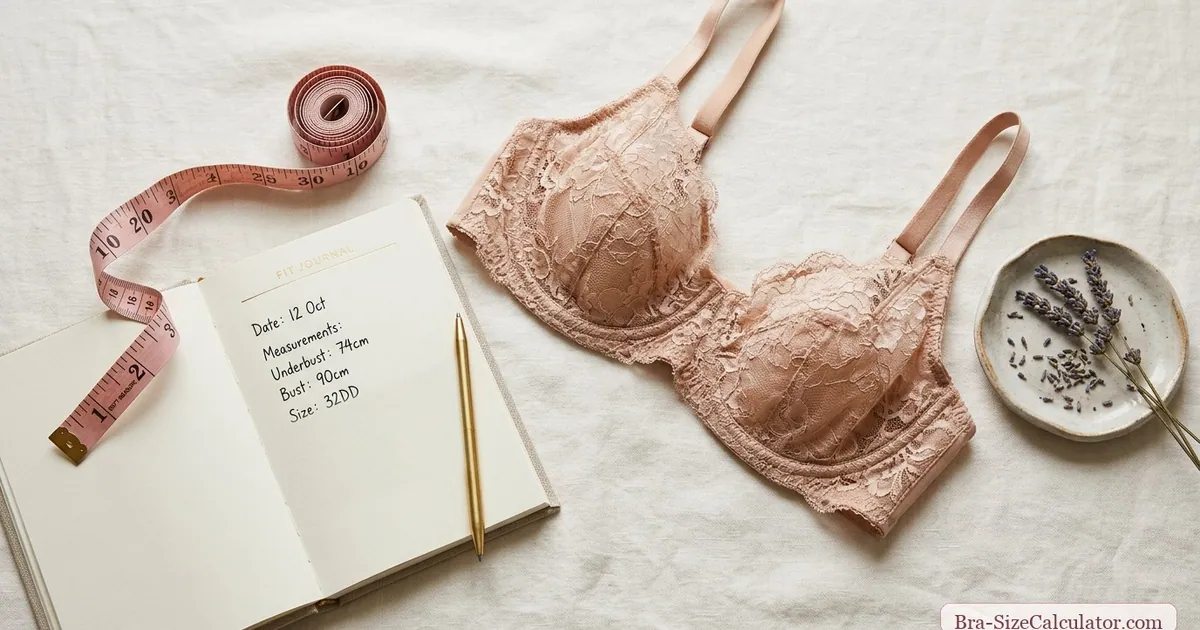
Weight also moves around. A band that fitted at 36 can need a 38, or the reverse, while the cup letter goes the other way. That is why the senior bra calculator asks for fresh numbers rather than your old size.
What to Look For
- A wide band with three or more hooks. More hook rows spread pressure and give you room to tighten the bra as it stretches.
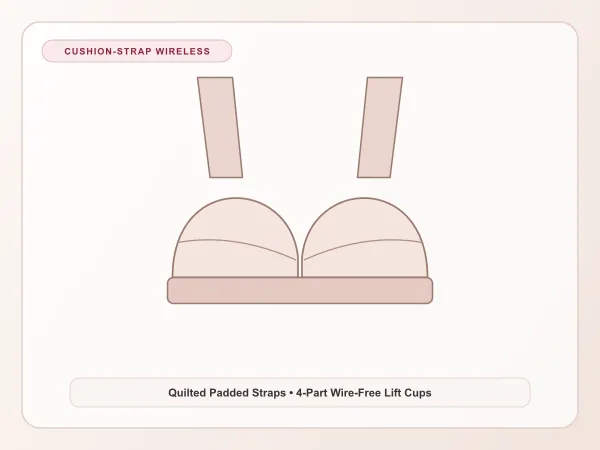
- Wider, padded straps. They spread weight across the shoulder instead of cutting a groove into it.
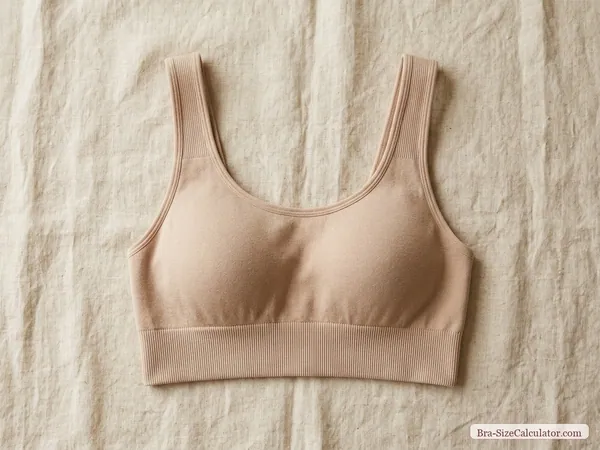
- Soft, stretch-top or seamed cups. Fabric that follows a softer shape gaps less than stiff foam.
- Front closure if fastening is hard. Hooks in front are easier to see and reach with stiff shoulders or sore hands.
- Wire-free if underwire hurts. A good wire-free bra uses a firm band and side panels to hold you up instead.
Wire-Free or Underwire?
Underwire still gives the most lift and separation. If you have always worn it and it feels fine, there is no reason to stop. But many people find that after 60 the wire presses on the ribs or sits on breast tissue at the sides because the shape has changed.
A well-built wire-free bra is not the same as a soft sleep bra. Look for one with a deep band, side panels, and cups made from more than one piece of fabric. The best wireless bras guide covers how to tell the two apart.
Front-Close Bras and Easier Dressing
Reaching behind to fasten hooks is one of the first things to get difficult with arthritis, a frozen shoulder, or after surgery. A front-close bra fixes that, and many come with a posture-style back that helps keep straps on the shoulders.
The trade-off is less adjustment. Most front-close bras have a single fastening position, so the band needs to fit snugly from day one. If it feels loose when new, go down a band size and up a cup to keep the same volume.
How to Check the Fit at Home
- Fasten the bra on the loosest hook. The band should sit level all the way around.
- Lean forward and scoop the breast tissue into each cup from the side, then stand up.
- Check the top edge of the cup. Wrinkles mean the cup is too big or the wrong shape; cutting in means too small.
- Raise both arms. If the band rides up, it is too loose.
- Check your shoulders after an hour. Red grooves mean the band is not carrying enough of the weight.
If Sagging Is the Main Concern
If lift is what you want most, the lifting bras for sagging breasts over 50 guide goes deeper into seamed cups and side-support panels. This page is about all-day comfort and ease first, with lift second.
Picks Worth Trying
The bras below cover the main needs: a wire-free everyday bra with a wide band, a front-close option for easy dressing, and softer styles for days at home. Check the size range on each listing, since some only start at a 36 band.