Why H Cup Changes What Matters
At this volume, construction quality separates a genuinely supportive bra from one that only happens to be labeled the right size. A band that’s slightly loose, straps that are too thin, or a cup built without real structural reinforcement will all cause noticeable discomfort at this size in a way they might not at a smaller one. This isn’t about needing a “special” bra, it’s about the same fit principles mattering more.
What to Check
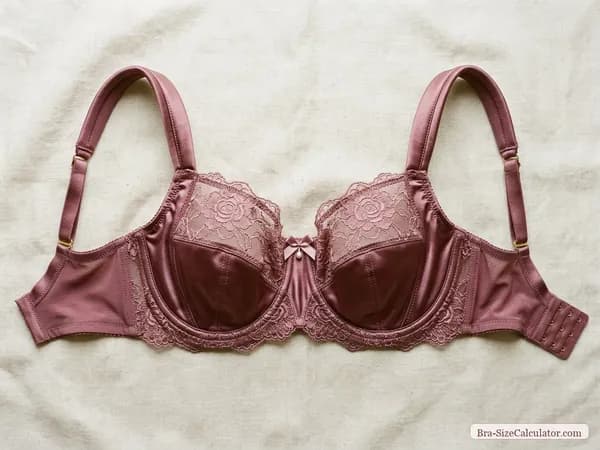
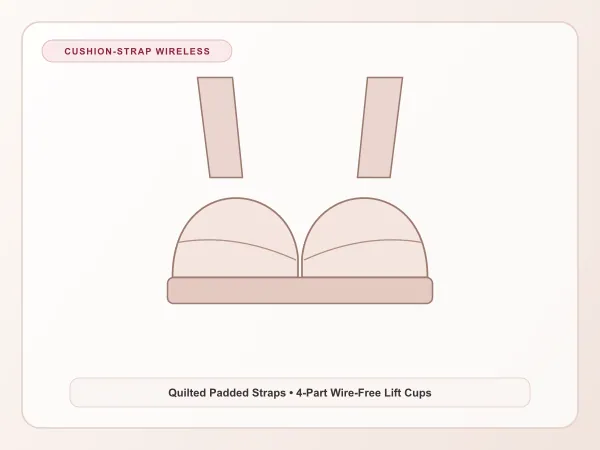
A wide band (ideally with multiple hook rows for adjustment as it stretches) does most of the structural work. Straps should be wide and cushioned; thin straps common on lower-support styles will dig in fast at this volume. Check for reinforced seaming or molded cup construction rather than soft, unlined fabric, which typically can’t hold shape at this size without wrinkling or shifting.
Styles Worth Trying
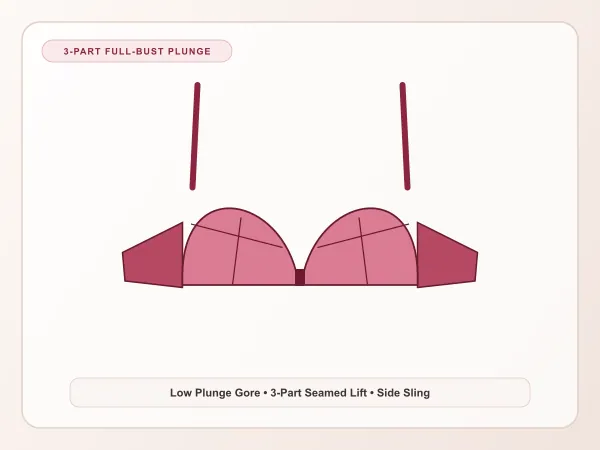
Full-coverage bras with a deep, structured cup and wide band are the most reliable everyday choice. Plunge styles work if they specifically include reinforced side panels.
A plain, unstructured plunge usually isn’t built for this volume. Specialty and extended-size retailers generally carry a wider range of genuinely engineered options than mainstream mall retailers at this size.
Common Fit Mistakes
Choosing a bra based on the cup letter alone, without checking actual construction quality, is the most common issue. An H cup label doesn’t guarantee the band, straps, or cup structure are built for the support this size needs. Read the specific product’s construction details, not only the size chart.
What an H Cup Genuinely Requires
At this volume, band width and strap placement matter as much as the cup itself. A narrow band or thin straps simply can’t distribute this much weight comfortably, regardless of how well the cup itself fits.
Construction to Prioritize
Wide-set, cushioned straps, a firm wide band with multiple hook rows for fine adjustment, and full-coverage or plunge cups with real structural seaming (not only padding) all matter more at this size than at smaller cups, where a simpler construction can still work fine.
Why an H Cup Needs Stronger Construction
At an H cup, the volume involved requires genuinely different construction than simply scaling up a smaller design. Wider bands, reinforced seams, sturdier hardware, and wider straps all become functional necessities rather than optional upgrades, since standard-scale construction often isn’t built to handle this much sustained weight comfortably.
Construction Features That Actually Matter at This Size
A band at least 1.5 inches wide (often wider) to distribute support across enough surface area, wide-set straps with genuine cushioning to prevent shoulder grooves, and multi-panel or seamed cup construction that shapes and contains volume more precisely than a single molded piece typically can at this size.
Common Fit Problems at an H Cup
Underband riding up is one of the most common complaints, almost always meaning the band itself needs to be snugger. Check that you’re not compensating for a loose band with tight straps, which just shifts discomfort rather than solving the underlying problem. Underwire poking near the sides or center can also indicate the wire width or cup shape doesn’t match your specific projection and spacing.
Where to Shop for This Size Range
Specialty lingerie retailers and brands specifically engineering for extended cup ranges generally offer more reliable construction at this size than mall-chain mass retailers, whose sizing often doesn’t extend this far with genuine attention to fit. Worth prioritizing over general convenience.
Investing in Fewer, Better Pieces
At this size range, a smaller collection of genuinely well-constructed bras generally serves better than a larger collection of mediocre ones, both for comfort and for cost-per-wear over the life of each piece.
Asking a specialty retailer’s staff directly about which of their lines are genuinely engineered for this range, rather than guessing from marketing copy, often saves considerable trial and error.