
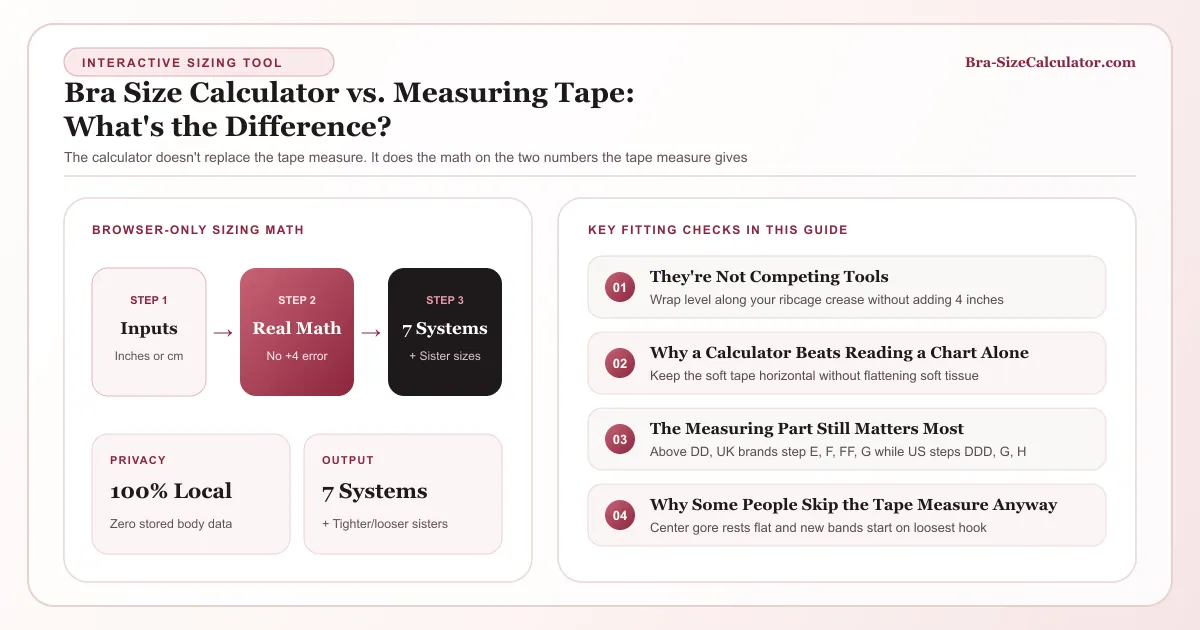
A bra size calculator doesn’t replace a measuring tape. It takes the two numbers a tape measure gives you (underbust and bust) and does the size-conversion math instantly.
They’re Not Competing Tools
You still need a tape measure to get your underbust and bust numbers. The calculator’s job starts after that. Converting those two numbers into a size across 7 different countries’ sizing systems instantly, instead of you doing the math or looking up conversion charts manually.
Why a Calculator Beats Reading a Chart Alone
Static size charts require you to manually cross-reference band and cup rows, and most only cover one country’s system. A calculator does the same lookup instantly and shows every system’s equivalent size at once.
The Measuring Part Still Matters Most
See How to measure correctly before using any calculator: accurate input is what actually determines whether the output size is right for you.
Why Some People Skip the Tape Measure Anyway
Not everyone has a tape measure on hand, or feels confident measuring alone. That’s exactly the gap the AI Smart Fit Calculator is built for, estimating a starting size from dress size and how your current bra feels instead.
What a Tape Measure Still Can’t Tell You
Even a perfect measurement doesn’t capture breast shape, tissue density, or how a specific cut sits on you. That’s why two people with identical measurements can still need different specific bras, and why trying the actual bra on still matters.
Whichever path gets you a starting size, the actual test still happens when you put a bra on and check the band, gore, and cups in person.
They’re Not Actually Competing Methods
A bra size calculator doesn’t replace measuring with a tape. It’s built entirely on top of it. The calculator takes the two numbers a tape measure gives you (underbust and bust) and does the band-and-cup math automatically, which is the part most people get wrong when sizing themselves by hand.
Where Manual Calculation Goes Wrong
The most common manual mistake is using an outdated rounding rule. Many older size charts add 4 or 5 inches to the underbust measurement for the band, a method most fitters now consider outdated for today’s more supportive band construction. A calculator applies the current, more accurate rounding method consistently, where doing it by hand invites old habits.
The Tape Measure Still Matters Most
No calculator can fix an inaccurate measurement. If the tape is loose, angled, or read at the wrong point on your body, the output will be wrong regardless of the math behind it. The calculator’s real value is consistency and correct rounding, not replacing the actual measuring step.
When the Two Methods Disagree
A calculator result and a hands-on fitting can disagree when your measurements fall right at a rounding boundary, when your shape doesn’t match the “average” assumptions built into standard sizing formulas, or simply due to measuring technique differences between self-measuring and a fitter’s technique. Neither method is inherently wrong. They’re just applying slightly different judgment calls at the edges.
Which to Trust More
For most people with straightforward proportions, a correctly self-measured calculator result is genuinely reliable and doesn’t require an in-person fitting to confirm. If you have unusual proportions, significant asymmetry, or you’ve tried several calculated sizes without success, an in-person fitter’s hands-on judgment can catch nuances a formula-based calculator can’t.
The Honest Bottom Line
Both methods rely on the same underlying principle (accurate measurement translated into a band-and-cup size) so neither is fundamentally more “correct” than the other; they’re just two paths to the same goal.
Both Tools Serve You Best Together
Using a calculator to get your starting size, then paying attention to how it actually feels once worn, combines the strengths of both methods rather than treating them as competing alternatives.