How Push-Up Works
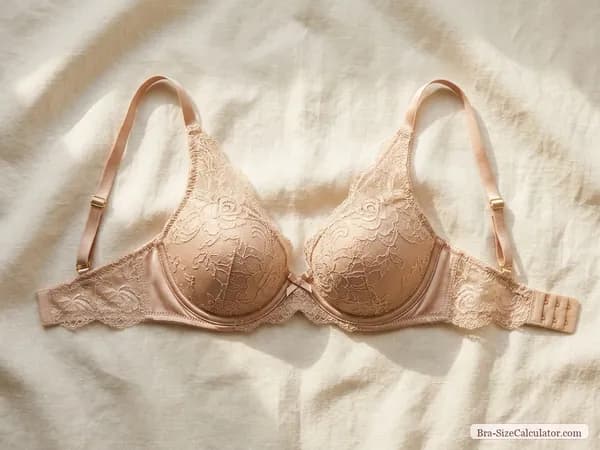
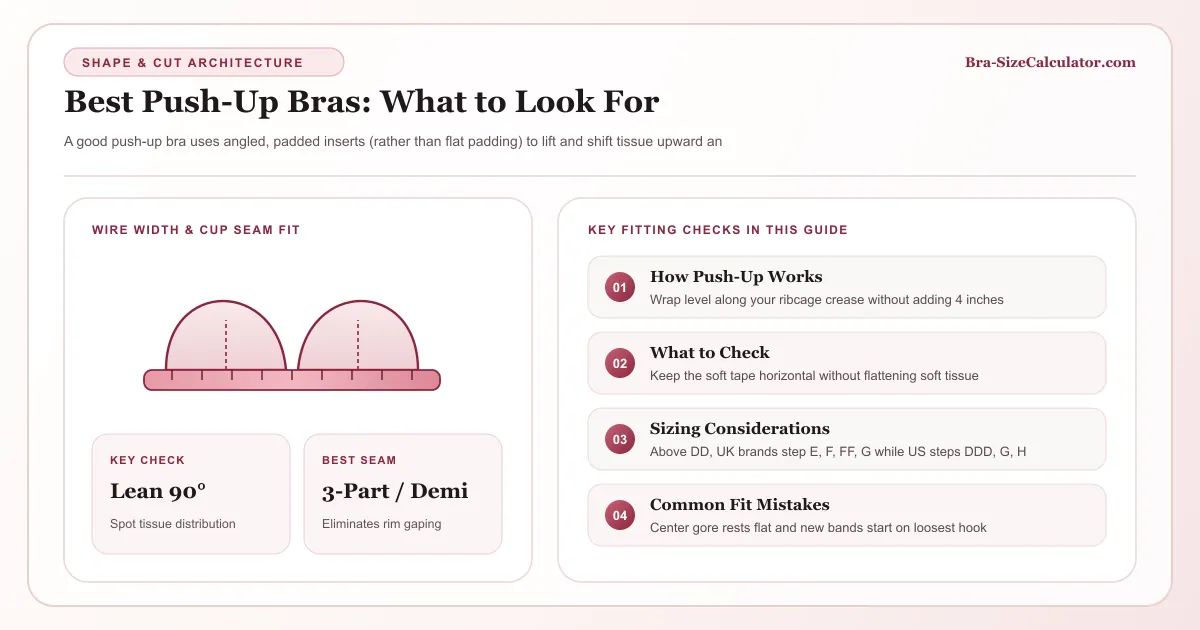
The lift in a push-up bra comes from angled padding (inserts shaped to push tissue up and toward the center) combined with underwire or structured cup seams that hold that shape in place. Flat, uniform padding without this angled shaping only adds bulk without creating real lift, which is the most common reason a push-up bra ends up feeling padded but not lifting anything.
What to Check
Feel for angled or contoured padding rather than a flat, uniform pad. You should be able to feel the padding is thicker at the bottom and thinner at the top of the cup. A firm, well-fitted band is only as important as the padding itself, since the band is what keeps the whole structure anchored; a loose band undermines any amount of push-up engineering above it.
Sizing Considerations
Push-up bras tend to run slightly differently than your standard size because of the extra internal structure. Sizing down a half cup from your measured size is common if the fit feels loose with standard sizing, but always check the specific brand’s fit notes rather than assuming a universal rule.
Common Fit Mistakes
The biggest mistake is choosing push-up based on padding thickness alone. A thickly padded bra with a loose band will look and feel less supportive than a moderately padded one with a snug, well-fitted band. Band fit determines whether the lift holds through the day.
How Push-Up Construction Works
Push-up bras use angled padding (thicker at the bottom and outer edge, thinner toward the center) to lift and shift tissue inward and upward. The angle of the padding, not only its thickness, is what creates the lift. Flat padding only adds bulk without repositioning anything.
A Real Limitation Worth Knowing
Push-up construction works best at smaller-to-moderate cup volumes, where there’s room for the angled padding to reposition tissue. At fuller cups, there’s less room for the padding to work with, so the lifting effect is typically much more subtle.
How Push-Up Construction Actually Works
Push-up bras use angled padding (typically thicker at the bottom and sides of the cup) to lift and push breast tissue up and inward, creating more visible cleavage and a fuller appearance under clothing than the same tissue would show in an unpadded style. The angle and placement of the padding, rather than only its thickness, determines how natural or dramatic the effect looks.
Construction Features That Determine Quality
Well-shaped, angled padding (rather than uniform flat padding) creates a more natural lift, a supportive band and underwire underneath the padding still matters for actual comfort and support, and gel or contoured inserts (versus basic foam) tend to hold shape better over repeated wear and washing.
Sizing Considerations for Push-Up Styles
Because push-up padding adds visual volume without changing your actual measured size, buying your true size (not sizing down expecting the padding to compensate, or sizing up for more room) generally gives the most comfortable and effective result. The padding does the lifting work; the size just needs to fit your actual body correctly underneath it.
Push-Up Options Across the Size Range
Push-up styles are traditionally more common at smaller to moderate cup sizes, but engineered options do exist for fuller busts, using structural lift (wire placement, band tension) rather than thick padding alone, since heavy padding becomes impractical at higher volumes. Worth specifically seeking out fuller-bust push-up options rather than assuming the style doesn’t extend to your size.
Matching Padding to Your Actual Goal
Lighter padding creates a subtle lift for everyday wear, while more dramatically angled padding is better suited to occasions where a bigger visual change is the goal. Choosing padding intensity based on the actual context you’re dressing for tends to give more satisfying results than always reaching for the most dramatic option.