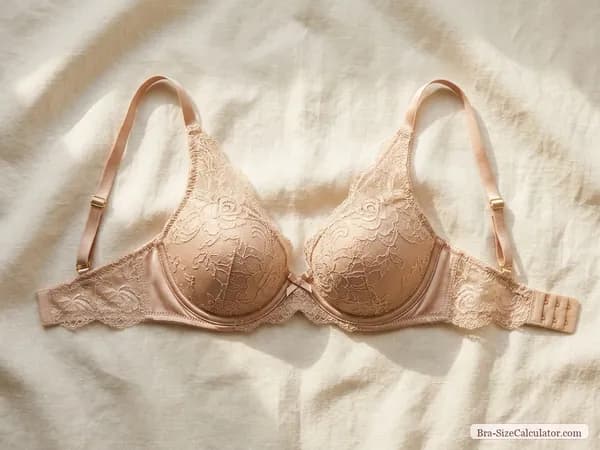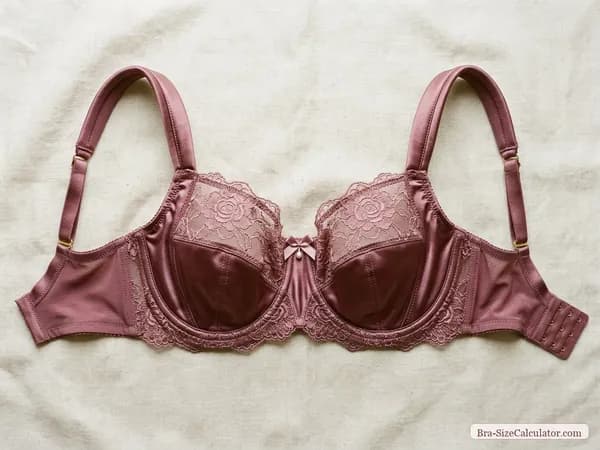
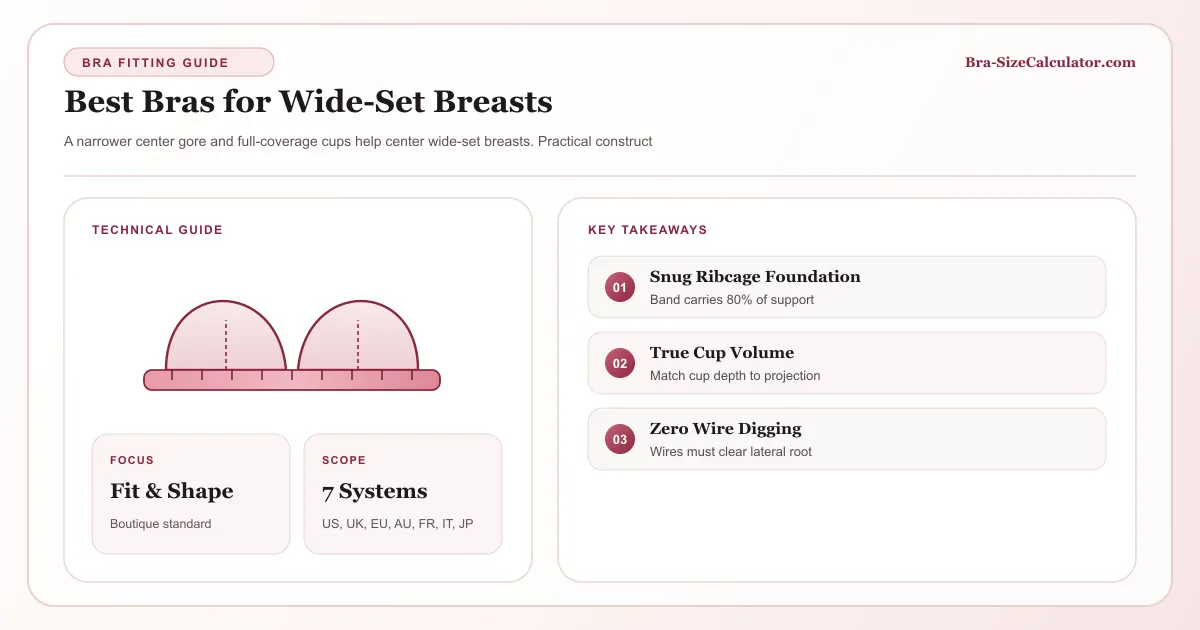
A bra with a narrow center gore and full-coverage cups helps bring wide-set breasts toward the center for a more centered, supported shape.
What “Wide-Set” Means
Wide-set (sometimes called “side-set”) describes more space between the breasts, with fullness toward the outer sides of the chest. It’s a normal shape variation, not a fit problem in itself. The goal is choosing a bra structure that works with that shape.
Construction That Helps
A narrower center gore (the fabric panel between the cups) helps draw the cups closer together. Full-coverage or plunge styles with side support panels help contain and center fullness that would otherwise sit toward the sides.
What to Avoid
wide-set bra styles or bras with minimal side coverage can let fullness spill outward rather than centering it. If a bra style consistently looks like it’s not containing the sides, that’s a style-fit mismatch, not a sizing error. Check the band and cup size first with the Calculator, then adjust style.
Cup Shape Matters as Much as Gore Width
A narrow center gore alone doesn’t do all the work. Cups with more projection (rather than flat, shallow cups) also help bring wide-set tissue toward center instead of letting it sit toward the outer chest.
Common Shopping Mistakes for This Shape
Sizing down in the band to try to force the cups closer together usually backfires, creating discomfort without recentering anything. The center gore and cup shape do that job, not a tighter band.
If a bra’s gore never quite sits flat no matter how you adjust it, that’s usually a sign the style (not your shape) is the mismatch, and a different cup construction is worth trying.
What “Wide-Set” Means for Fit
Wide-set breasts sit farther apart on the chest wall with more visible space at the center (the sternum area) than a “close-set” shape. Bras with a narrow center gore (the piece of fabric between the cups) often can’t bridge that gap without gapping themselves or pulling cups inward uncomfortably.
What “Wide-Set” Actually Means for Fit
Wide-set breasts sit further apart on the chest, with more space between them at the center rather than being close together. This affects how a bra’s center gore (the piece between the cups) needs to be shaped, since a standard narrow gore can gap or fail to sit flush against the sternum on a wider-set frame.
Construction Features That Help
A plunge or wider-set center gore designed to accommodate more space between the breasts, side support panels or wings that pull volume toward center rather than letting it drift outward, and balconette or full-cup styles with a horizontal design that naturally centers volume all tend to work better than styles built for a closer-set frame.
Common Fit Problems Specific to This Shape
A center gore that doesn’t sit flat against the sternum is the clearest sign a bra isn’t built for a wide-set frame. This often gets misdiagnosed as a cup-size problem when it’s actually a shape-and-construction mismatch. Underarm spillage can also occur if the cups aren’t angled to pull volume centrally.
Styles to Look For Specifically
Plunge styles with side support boning, balconette styles with a wider base, and bras explicitly marketed with side-support panels for wide-set shapes all tend to outperform standard center-narrow designs for this specific shape.
Checking Center Gore Fit Specifically
When trying on a new bra, press two fingers against the center gore. If it doesn’t stay flat against your sternum without you holding it there, that’s a clear, quick sign the gore shape doesn’t match your spacing, regardless of how the rest of the bra feels.
If a plunge style still gapes despite a wider gore, checking cup volume itself (rather than just gore shape) is the logical next troubleshooting step.