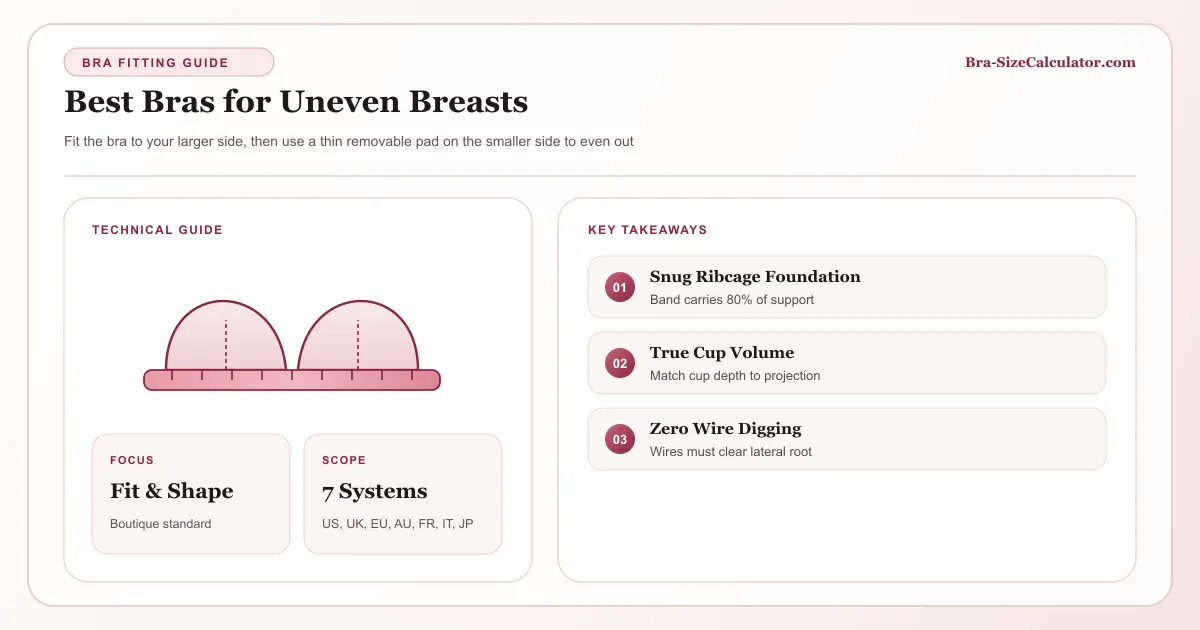
Fit the bra to your larger side, then use a thin removable pad on the smaller side to even out the appearance. Most people have some natural size difference between breasts.
Asymmetry Is Normal, Not a Problem to Fix
Some degree of size difference between breasts is extremely common. It’s a normal body variation, not something wrong with you. The goal of a bra isn’t to make both sides identical; it’s to make sure both sides are comfortably and securely supported.
Fit to the Larger Side
Measure and size to your larger breast. A cup that’s too small on the bigger side causes spillage and discomfort; a cup that’s too big on the smaller side only leaves empty space, which a thin pad or pad insert can fill without any fit problem.
Styles With Removable Pads
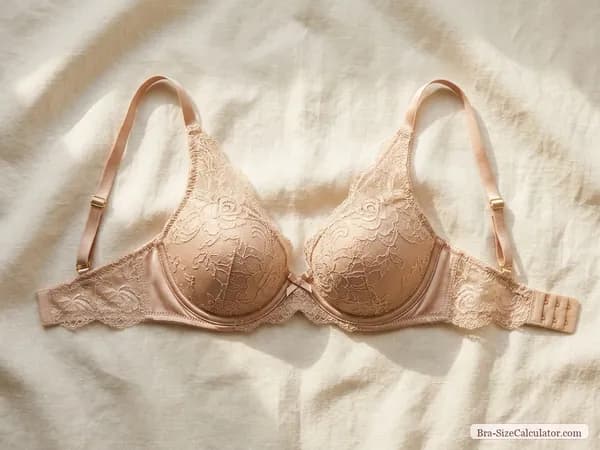
Look for bras with pocketed cups designed for removable inserts. You can add or remove padding on only one side to balance the look, without needing a custom-made bra.
Two Padding Strategies Compared
A removable pad added only to the smaller side keeps both cups the same base size and evens out the visual difference. A pre-padded asymmetric insert (rarer, sometimes custom) more precisely fills a specific shape gap but costs more and takes more trial and error to get right.
When to only Buy Two Sizes
For a difference larger than about one full cup size, some people find it more comfortable to buy two bras in different sizes and wear whichever side needs more room that day, rather than trying to force one bra to serve both sides.
Whichever approach you choose, comfort and support for both sides matters more than achieving visual symmetry. That’s a preference, not a requirement.
How Common This Is
Some degree of size difference between the two sides is extremely common. Most people have at least minor asymmetry, and it’s a normal variation, not something unusual that needs fixing. The practical challenge is only fitting a bra to two sides that aren’t identical.
What Works Well
Fit to your larger side first. A cup that’s slightly loose on the smaller side is far more comfortable and less noticeable than one that’s too tight on the larger side. Styles with removable padding let you add a thin pad to the smaller cup to even out the outward shape without changing the actual fit anywhere else.
Why This Is More Common Than Most People Realize
Some degree of breast asymmetry is extremely common. Most people have at least a small difference between sides, and noticeable asymmetry affects a significant portion of the population. This is normal variation, not a flaw to correct, though it does have practical implications for finding a bra that fits both sides comfortably.
The Standard Approach: Fit to Your Larger Side
The most practical general approach is sizing to your larger side and using a removable-pad style, adding a pad to the smaller side to even out the visual difference under clothing, if that’s something you want to address. This avoids the alternative problem of a too-small cup on your larger side, which is far more uncomfortable than slightly loose fabric on the smaller side.
Construction Features That Help
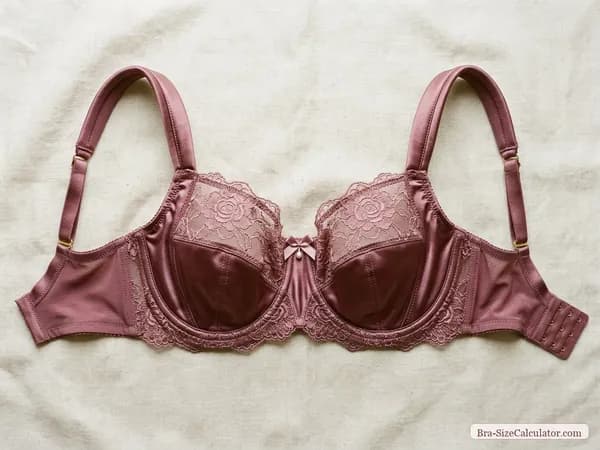
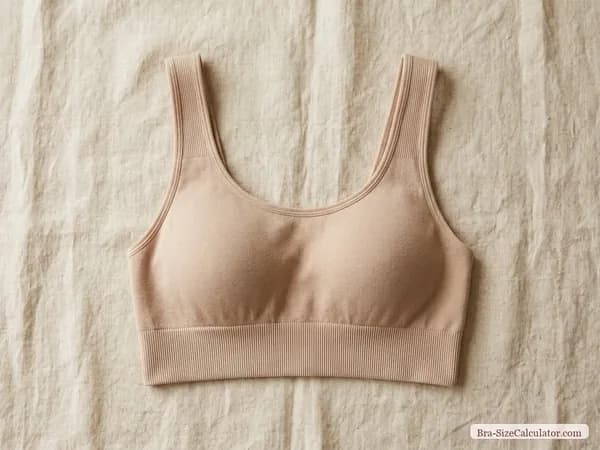
Removable or adjustable padding lets you customize each side independently, molded cups with some structural give accommodate a size difference better than rigid, precisely-molded cups, and styles with independently adjustable straps let you fine-tune each side’s fit separately rather than being locked into one uniform setting.
When Asymmetry Is Significant Enough to Need Different Solutions
For more significant differences, some people find success with two different bras worn on alternating days, specialty asymmetric-cup construction from certain brands, or simply choosing styles where the visual difference matters less (patterned fabric, looser-fitting tops layered over). There’s no single right approach. What matters is finding what’s comfortable and confidence-building for you specifically.
A Confidence Note
Whatever solution you land on (padding, two different bras, or a specialty asymmetric style) the goal is your own comfort and confidence, not matching some external standard of symmetry that most bodies don’t actually meet anyway.