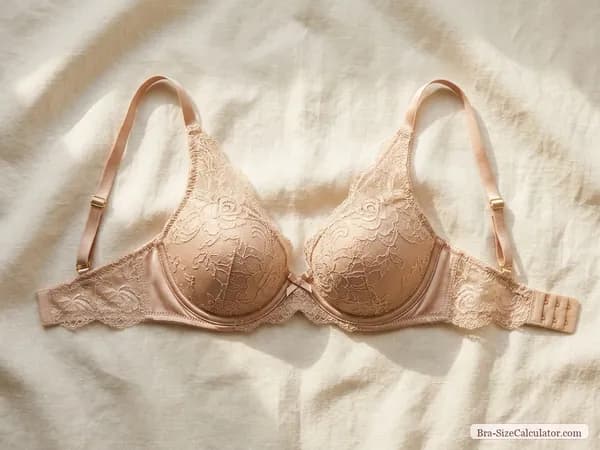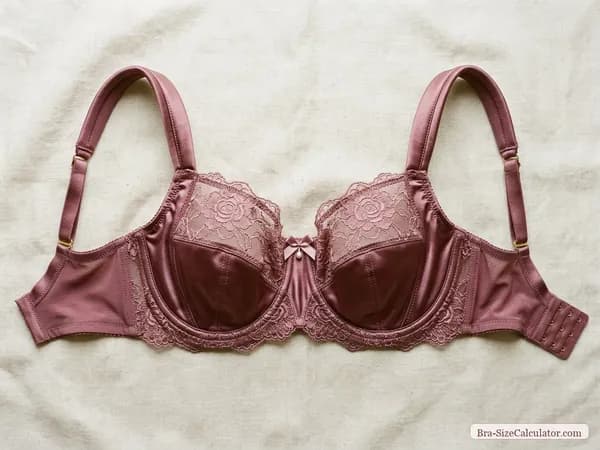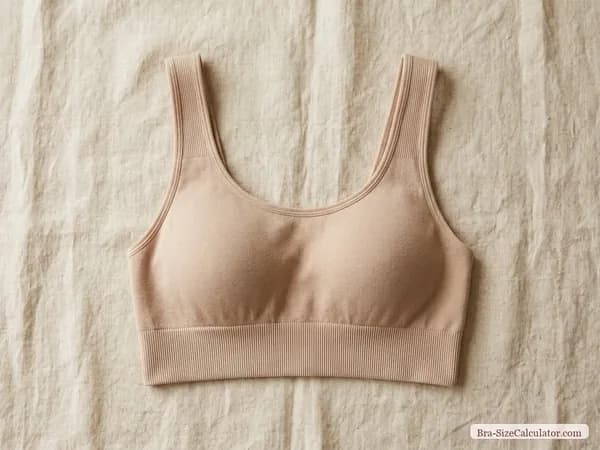
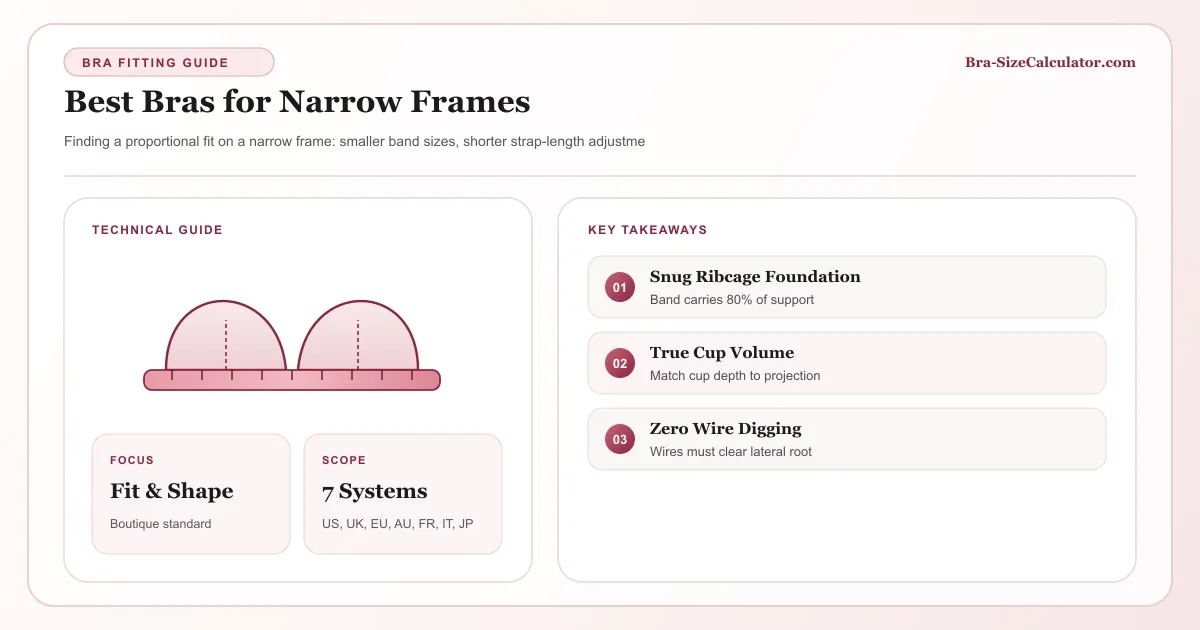
On a narrow frame, focus on getting the band size right first (often 28-32 inches). Cup size is independent of frame size and can still be any letter.
Band Size Isn’t About Body Size
A narrow frame usually means a smaller band measurement, but cup size is a completely separate number based on the difference between bust and band. A narrow-framed person can still have any cup size. Don’t assume a small band means a small cup.
Strap Adjustment Range
Some bras have a wide adjustment range on the straps that’s designed for a broader range of torso lengths, on a narrow, shorter frame, this can mean straps are already near their shortest setting out of the box. Check the strap adjustment range before buying if this has been an issue before.
Getting an Accurate Band Number
Run your exact measurements through the Bra size calculator rather than guessing based on frame size alone. Band sizes below 32 inches are common and normal, and plenty of brands stock them even if they’re less visible in-store.
Where Narrow Frames Struggle Most in Standard Sizing
Mainstream size runs often stop at a 32 or 30 band even when a smaller band with a fuller cup (say, a 28 or even 26 band) would fit more correctly. Narrow-framed people are more likely to be pushed into an ill-fitting nearby size instead of their true one simply because it’s what’s in stock.
Petite-Specific Brands vs. Standard Sizing
Brands that specifically extend their band range downward (rather than only labeling regular sizes ‘petite’) are worth seeking out if standard racks consistently run out of range before reaching your true band size.
Don’t assume the smallest size on a standard rack is automatically your size. A true narrow-frame band can sit below what most stores stock, making a specialty size run worth seeking out.
Why Standard Bands Often Ride Up on a Narrow Frame
Bra bands are cut with an expected curve that assumes a certain ratio of ribcage width to depth. On a narrower frame, that curve can leave gaps at the sides where the band isn’t pressing against the body, letting it slide and ride up even at the “correct” size on a chart.
What to Look For Instead
Narrower band width isn’t the fix: a narrower band concentrates pressure over less surface area. Instead, look for adjustable multi-hook closures (more hooks let you fine-tune the exact curve) and shorter underwire spans that don’t extend past your actual ribcage width.
Why Standard Band Sizing Sometimes Doesn’t Work Well
A narrow frame often means a smaller band size, but standard band construction (strap width, hardware spacing) doesn’t always scale down proportionally, which can result in straps that sit too wide-set or hardware that feels bulky relative to your frame even in the technically correct size.
Construction Features Worth Prioritizing
Narrower strap spacing designed for smaller frames, proportionally scaled hardware rather than standard hardware sized for larger bands, and shorter band length in the back panel all help a narrow-frame bra sit correctly rather than needing extra adjustment or hook-tightening to compensate for excess band length.
Common Fit Issues Specific to Narrow Frames
Straps sliding off the shoulders is a frequent complaint, often because standard strap spacing is designed for a wider average frame. Look specifically for adjustable strap width, rather than only adjustable strap length. Excess band length even on the tightest hook is another common issue, which usually means trying a smaller band size (with the corresponding sister-size cup adjustment) rather than assuming your body doesn’t fit standard sizing.
Shopping Tips
Brands that specifically design for petite or narrow frames often scale proportions (strap spacing, band length, hardware size) rather than just offering smaller numeric sizes. Worth seeking out if standard sizing consistently feels oversized in non-size-related ways.
Checking Junior or Petite-Specific Lines
Many mainstream brands offer a junior or petite-specific line with narrower proportions built in as standard. Checking whether your usual brand has one, before assuming you need to switch brands entirely, can solve proportion issues while keeping a fit you already trust.