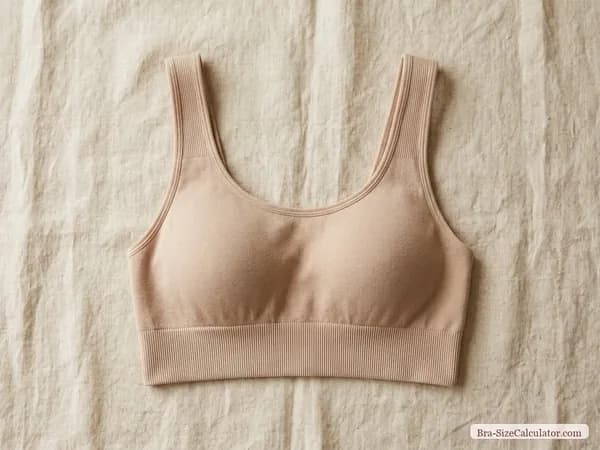
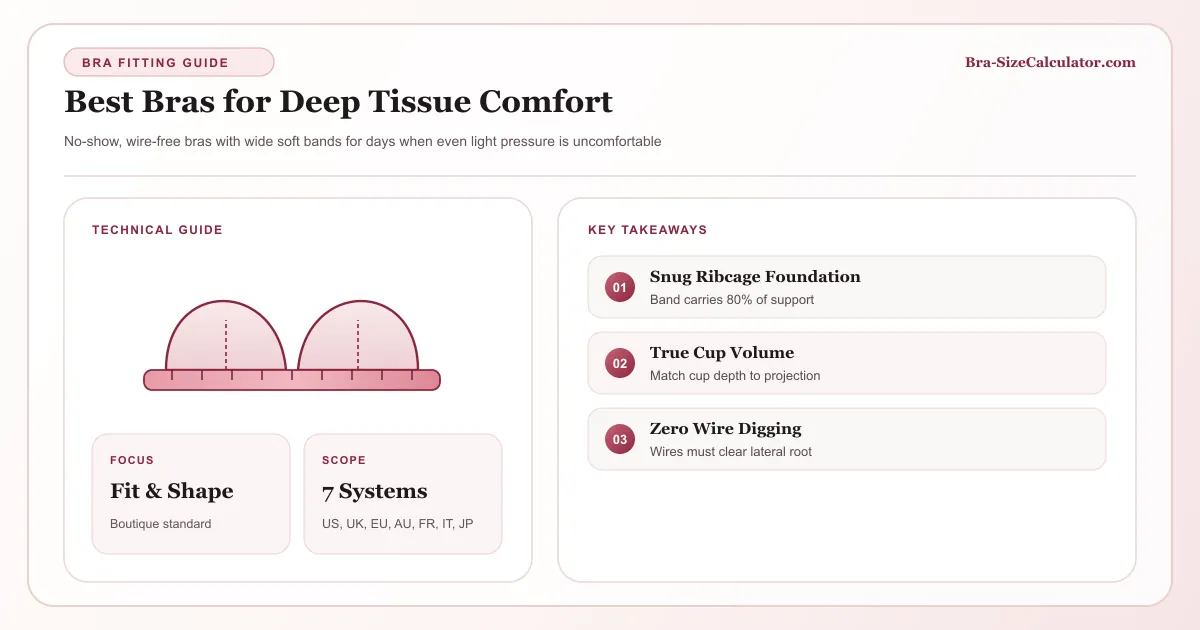
A unbroken, wire-free bralette or bra with a wide soft band gives the least pressure on tender or sensitive days.
What to Avoid on Sensitive Days
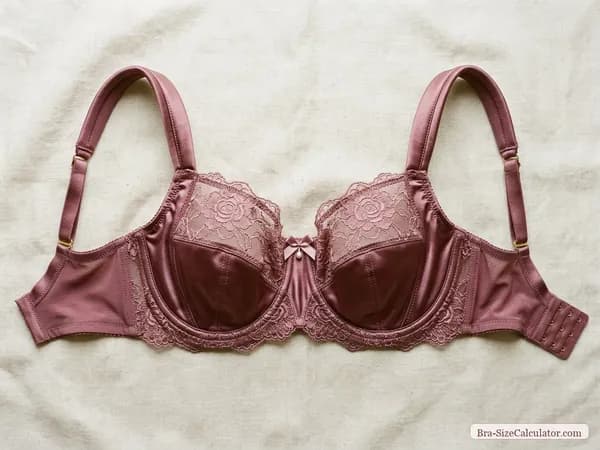
Underwire, narrow bands, and heavy padding all concentrate pressure on specific points. On days when breast tissue feels tender (which can happen around a menstrual cycle, after exercise, or for other reasons) those pressure points become noticeably uncomfortable.
What Helps
Wide, soft, wire-free bands spread support across more surface area instead of pressing into one line. Unbroken cup construction avoids any stitching pressing into sensitive tissue. Soft, stretchy fabric (like modal or cotton blends) instead of structured, rigid material.
Sizing Still Matters
A too-tight band is uncomfortable on any day, but especially on a sensitive one. If it’s been a while since you measured, run the numbers through the Bra size calculator- you may be able to size up slightly in the band for extra comfort without losing support.
Fabric Choices That Matter Most
Modal and bamboo-blend fabrics tend to feel softer against sensitive skin than standard cotton or synthetic blends, and they hold less friction against tender tissue throughout the day.
Sensitive Days Aren’t Always Predictable
Because tenderness can show up unexpectedly around a cycle, after exercise, or for other reasons, it’s worth keeping one genuinely soft, wire-free option in rotation at all times rather than only buying one when a sensitive stretch has already started.
Keep at least one genuinely soft, wire-free option in rotation even during comfortable stretches, so you’re not shopping under pressure the next time sensitivity shows up unexpectedly.
Where Discomfort Comes From
For fuller, denser tissue, discomfort usually traces back to pressure points. An underwire digging into tissue instead of following the ribcage crease, or a band that’s too narrow to distribute weight across enough surface area. The fix is rarely “softer fabric,” it’s better structural distribution of the load.
Construction That Reduces Pressure
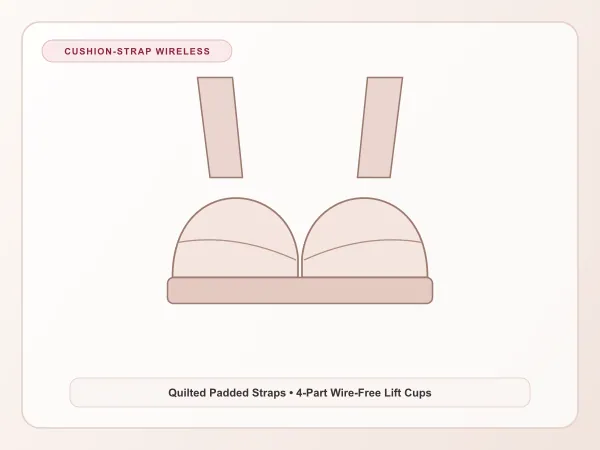
Wider underwire channels, wider bands, and cushioned strap padding spread weight over more surface area instead of concentrating it at a few contact points. Wireless styles with strong side-support panels can work well too, provided the band itself is doing real support work rather than relying on the cup alone.
What “Deep Tissue Comfort” Actually Addresses
This refers to bras built for sensitivity, tenderness, or discomfort in breast tissue itself (whether from hormonal fluctuation, post-surgical recovery, or general sensitivity) rather than standard support needs. Construction priorities shift from maximizing shape or lift toward minimizing pressure points and irritation.
Construction Features That Genuinely Help
Wire-free construction removes a common pressure point entirely, soft smooth cup construction avoids irritating seams against sensitive tissue, and wide, well-padded straps distribute weight over more surface area rather than concentrating it in thin lines that can dig in when tissue is already tender.
Fabric Considerations for Sensitive Tissue
Soft natural fibers or specifically designed sensitive-skin synthetic blends reduce friction and irritation compared to stiffer or heavily textured fabrics. Tagless construction and flat, covered seams also matter more here than in a typical everyday bra, since even a normally-unnoticeable tag or seam can become uncomfortable against sensitive tissue.
When to Prioritize This Over Standard Support Features
If you’re experiencing ongoing tenderness or sensitivity (from hormonal cycles, recovery from a procedure, or any other cause), prioritizing comfort-focused construction over shape or support features is a reasonable choice. Support can often be reintroduced gradually as comfort allows, but forcing structured support onto sensitive tissue tends to make discomfort worse, not better.
Tracking What Helps Over Time
If sensitivity fluctuates (for example, with a hormonal cycle), keeping a mental note of which specific features (wire-free, particular fabric, strap width) helped most during a tender period makes it easier to shop confidently the next time it happens.
Communicating specific discomfort (pressure, seam irritation, wire poking) to store staff, if shopping in person, often leads to more useful style suggestions than a general request for something soft.